

AFCN 2026
Erasmus+ Mobilities 2025
Music therapy, digital skills and exchange of practice in three European countries
The REVIVART Association has completed the round of mobilities carried out under the accredited adult education project 2025-1-RO01-KA121-ADU-000310772, funded by the Erasmus+ programme and implemented on the basis of the accreditation obtained in 2024. This year, 26 people took part in the project activities — adult learners and staff of the association — amounting to 142 mobility days in Greece, Ireland and Denmark.
The central theme of the mobilities was music therapy applied in work with adults with sensory impairments, complemented by two related strands: digital skills in adult education and an entrepreneurship component.
Group mobility of adult learners | Crete, Greece (18–22 May 2026)
The largest mobility flow brought together 16 participants and 4 accompanying persons, who worked together with the trainers of the Patriarchal Higher Ecclesiastical Academy of Crete in Heraklion (P.U.E.A.K. Crete). The activity took place from 18 to 22 May at the premises of the Cretan institution. The programme included practical sessions of therapy through Byzantine music, the observation of working groups with adult beneficiaries and workshops devoted to the instruments used in educational work. Five of the participants were people with fewer opportunities, for whom dedicated support measures were provided.
Job shadowing | Ireland (12–18 April), Greece (18–22 May), Denmark (27 July–2 August 2026)
Four members of the REVIVART staff took part in direct observation placements at Munster Music Therapy (Ireland), P.U.E.A.K. Crete (Greece) and The Nordic Crew, Aarhus (Denmark). The mobilities made it possible to follow music therapy and entrepreneurship activities and to see how the host organisations build their intervention plans, assess the progress of their beneficiaries and organise their multidisciplinary teams.
Structured courses | 3–9 May (Italy), 3–9 August 2026 (Greece)
Another four trainers of the REVIVART Association attended structured courses, learning to use modern methods of therapy through music while at the same time developing digital skills specific to adult education.
The learning outcomes set out in the learning agreements were certified by certificates issued by the providers and by Europass Mobility documents.
Experts invited to Bucharest | 22–26 June, 29 June–3 July 2026
Two specialists from abroad held working sessions at the association’s headquarters, addressed both to the staff and to the beneficiaries involved in current activities. Professor Michail Stroumpakis of the Patriarchal Higher Ecclesiastical Academy of Crete in Heraklion was present within the REVIVART community from 22 to 26 June, while Daniel Dineen of Munster Music Therapy came to Bucharest in the week of 29 June–3 July.
The two experts gave lectures on the theoretical framework of music therapy in adult education and on the distinction between receptive and active approaches, and also led practical sessions for our beneficiaries.
Cei doi experți au susținut atât prelegeri privind cadrul teoretic al muzicoterapiei în educația adulților și distincția dintre abordările receptive și cele active, susținând și sesiuni practice pentru beneficiarii noștri.
Two specialists from abroad held working sessions at the association’s headquarters, addressed both to the staff and to the beneficiaries involved in current activities. Professor Michail Stroumpakis of the Patriarchal Higher Ecclesiastical Academy of Crete in Heraklion was present within the REVIVART community from 22 to 26 June, while Daniel Dineen of Munster Music Therapy came to Bucharest in the week of 29 June–3 July.
The two experts gave lectures on the theoretical framework of music therapy in adult education and on the distinction between receptive and active approaches, and also led practical sessions for our beneficiaries.
 Funded by the European Union. Views and opinions expressed are however those of the author(s) only and do not necessarily reflect those of the European Union or of the Romanian National Agency for Community Programmes in the Field of Education and Vocational Training (ANPCDEFP). Neither the European Union nor ANPCDEFP can be held responsible for them.
Follow our activities on Facebook: 24 April 2026 | 13 May 2026 | 24 May 2026 | 26 June 2026 | 4 July 2026 | 15 July 2026
FANAR
Between April and August 2026, the REVIVART Association, in partnership with the National University of Music Bucharest (UNMB) and with the support of cultural and educational institutions in Bucharest, Brăila and Buzău, carried out the project “FANAR”, co-financed by the National Cultural Fund Administration. The project proposed a performative exploration of the Phanariot era and sought to build and retain national audiences for the “Dimitrie Cantemir” Early Music Ensemble of the UNMB. By bringing together research, artistic performance, music education and public communication, it drew renewed attention to the Oriental-Levantine sonorities of urban folklore in the Romanian Principalities and to repertoires preserved in nineteenth-century manuscripts.
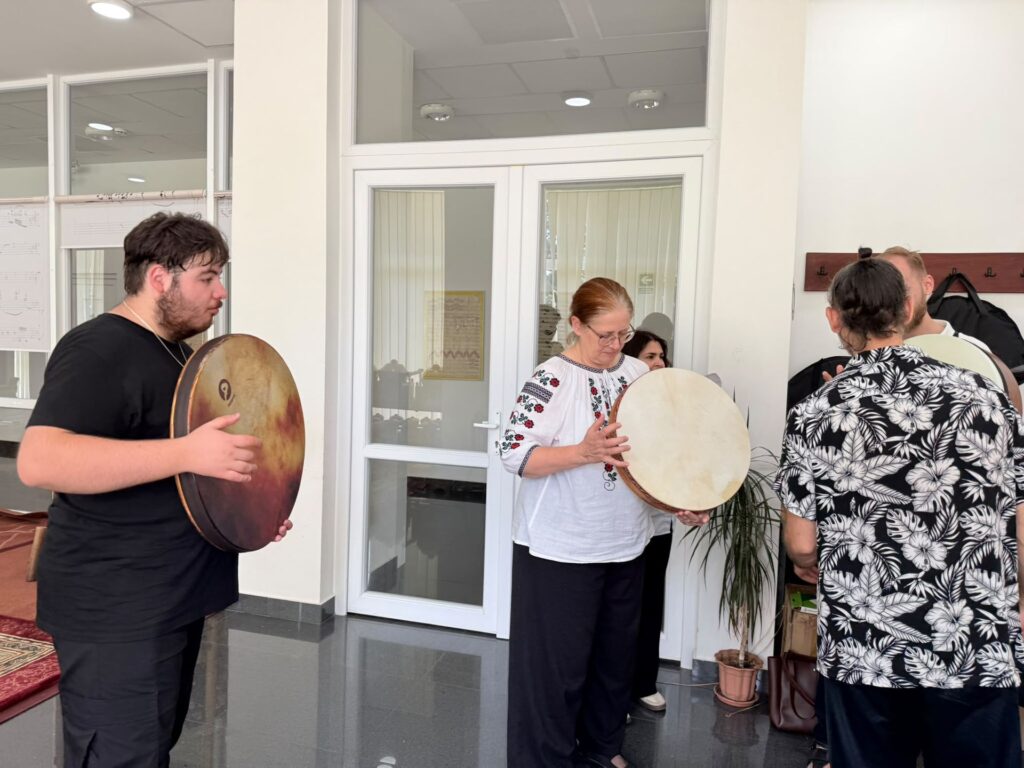
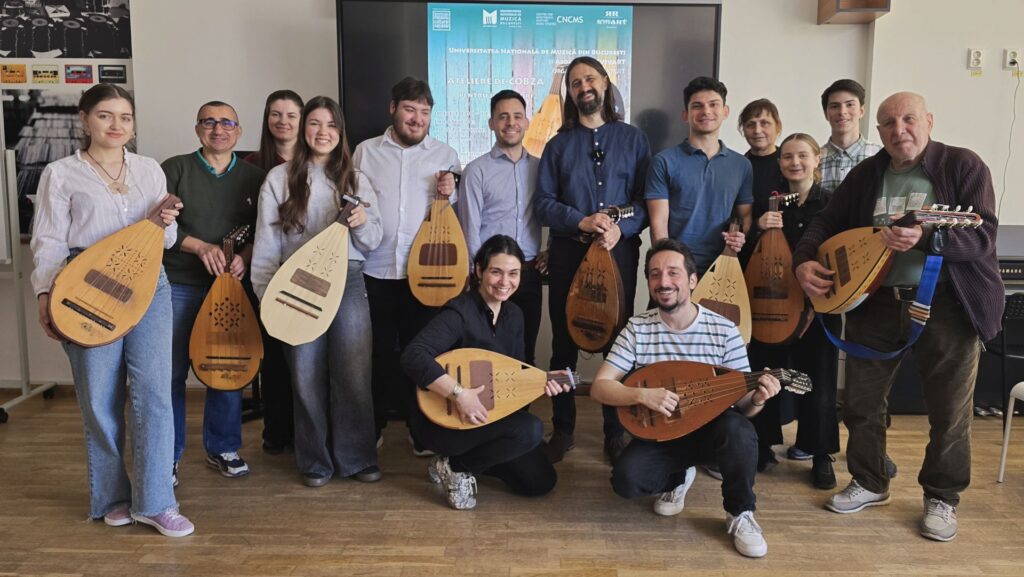
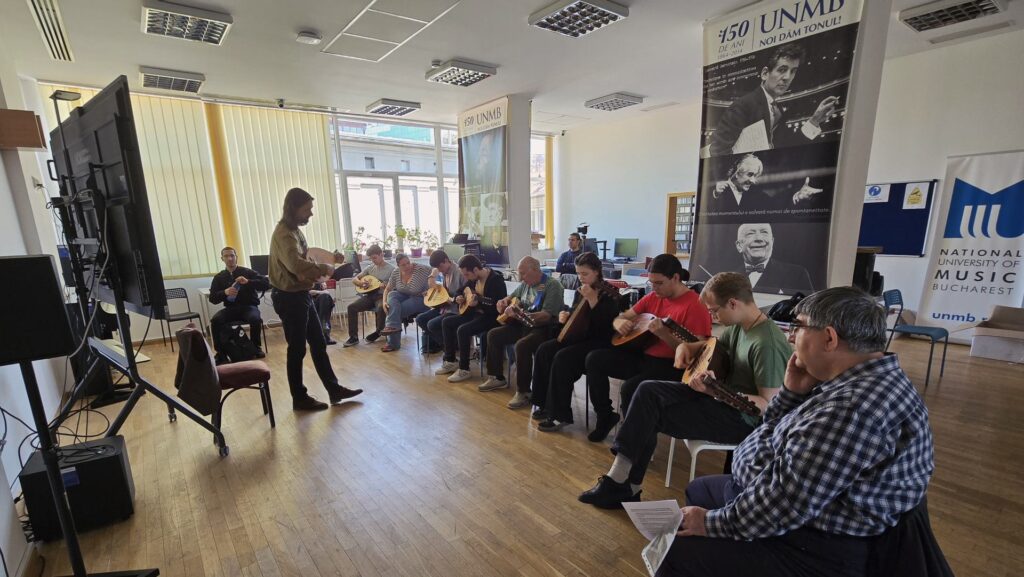
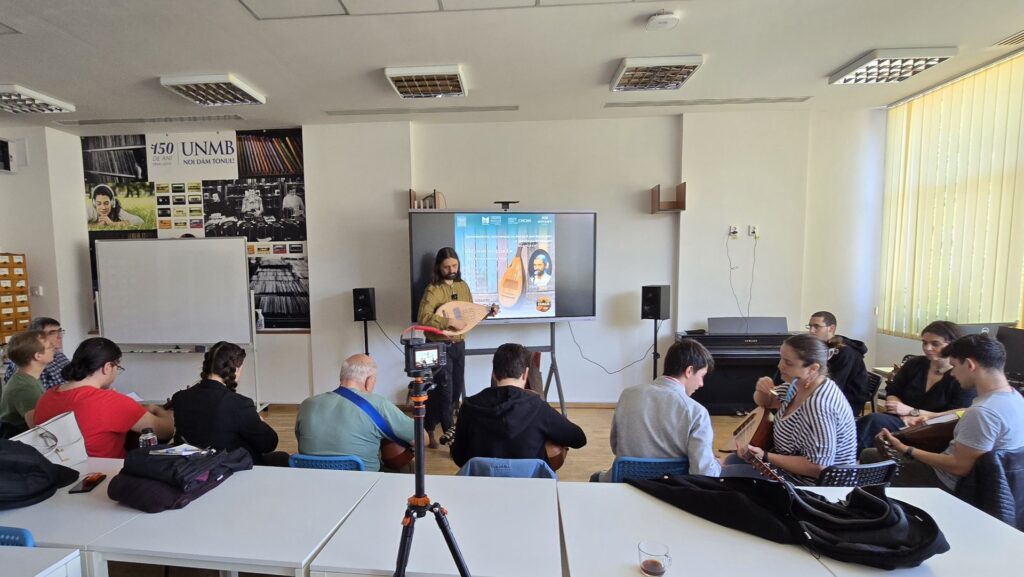
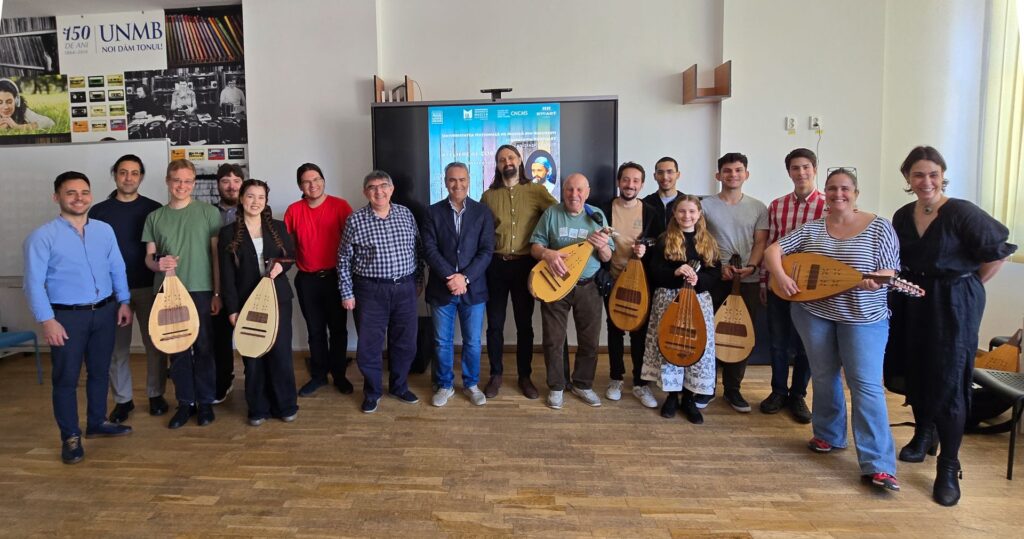
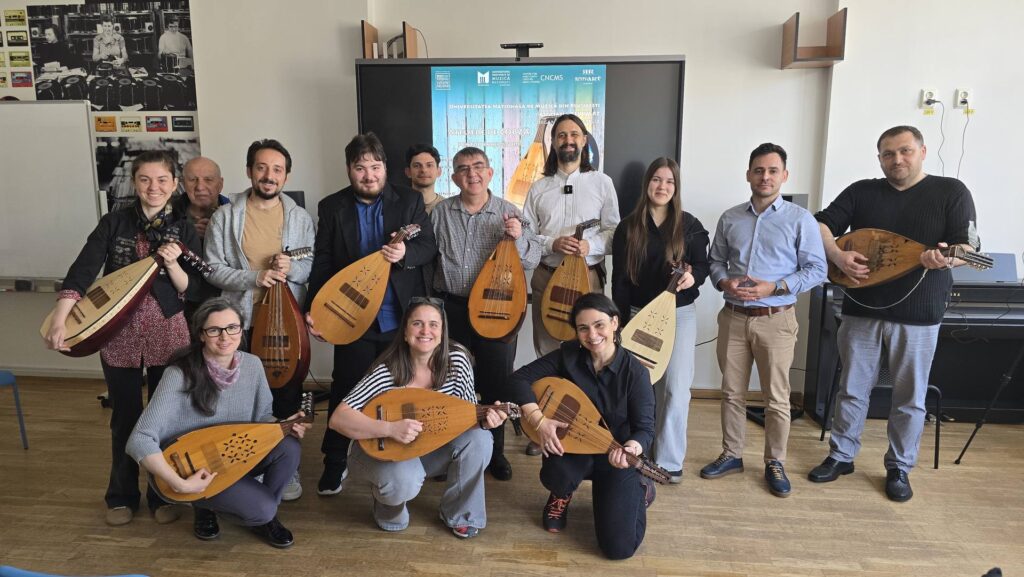
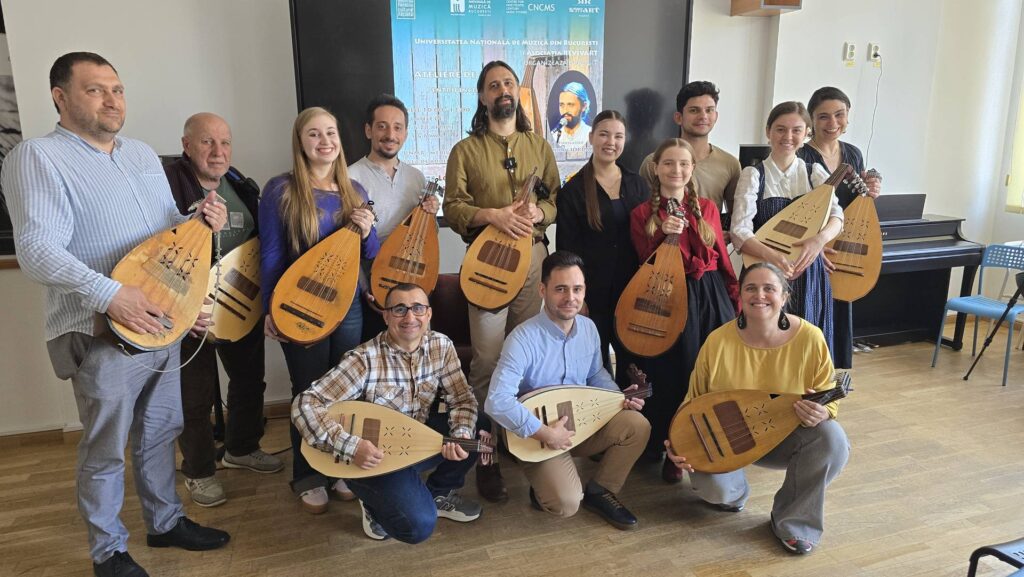
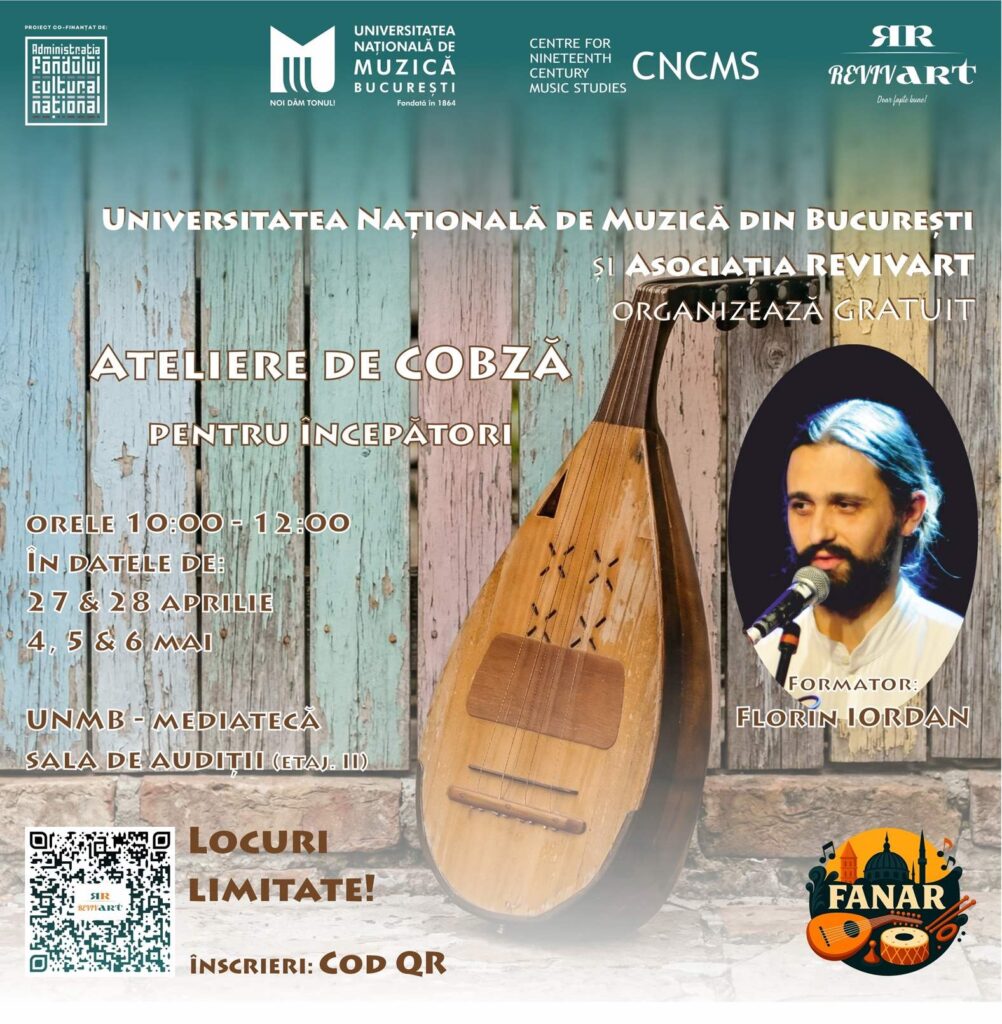
The training component was built around hands-on experiences for beginners, addressed both to the students and teaching staff of the UNMB and to young people, adults and seniors interested in early music. Between 27 April and 6 May, the ethnomusicologist Florin Iordan, coordinator of the “Trei Parale” band, led five cobza workshops. The roughly 20 participants covered tuning, accompaniment, rhythmic patterns and techniques specific to traditional genres such as the hora românească, the hora nemțească, the sârba veche, the geamparaua and the rustemul. Part of the content was subsequently made available to the public free of charge on YouTube.
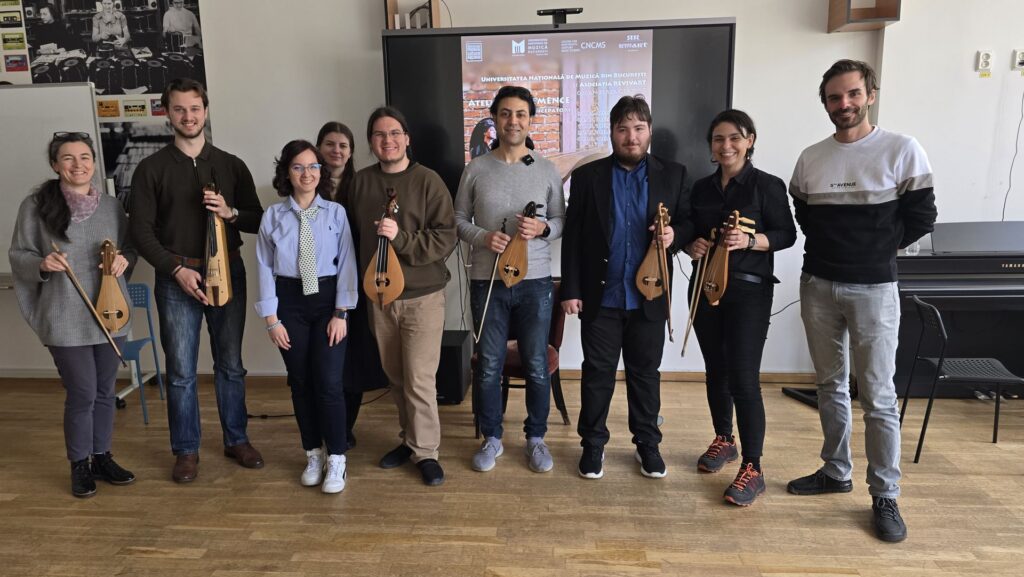
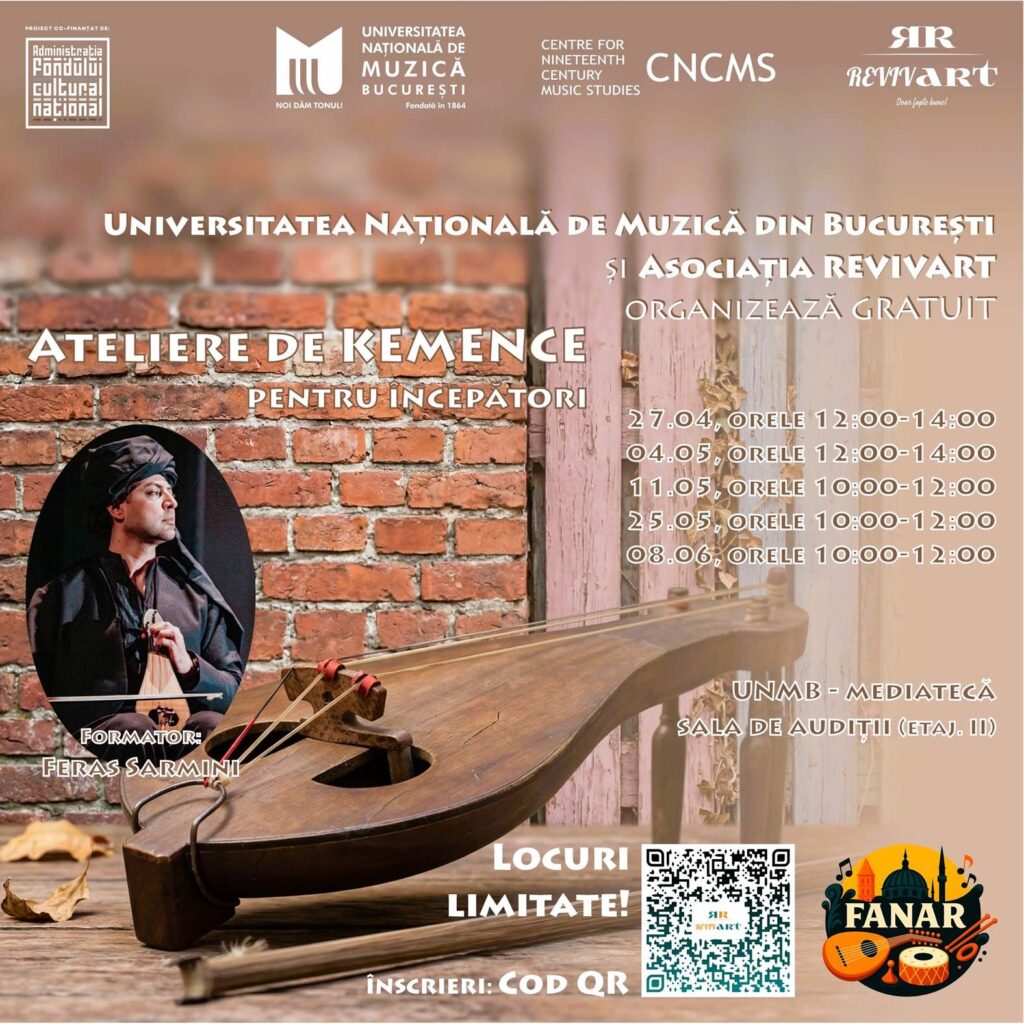
In parallel, Dr Feras Sarmini coordinated the kemençe workshops, familiarising the participants with the history of the Constantinopolitan lyra, with the forms in which it circulated in the Mediterranean and Levantine worlds, and with the playing position and the elementary performance techniques of the instrument. The series responded to the need for access to specialised guidance for an instrument rarely found in current educational provision, and it created a shared working framework for absolute beginners and for musicians already familiar with Oriental repertoires.
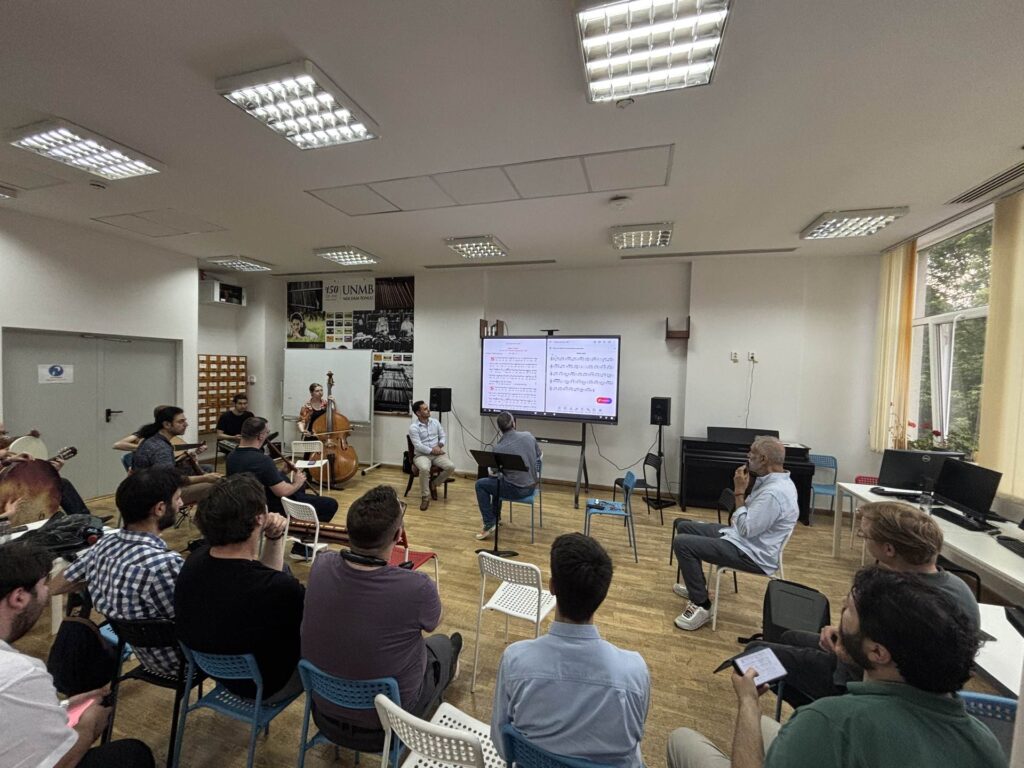
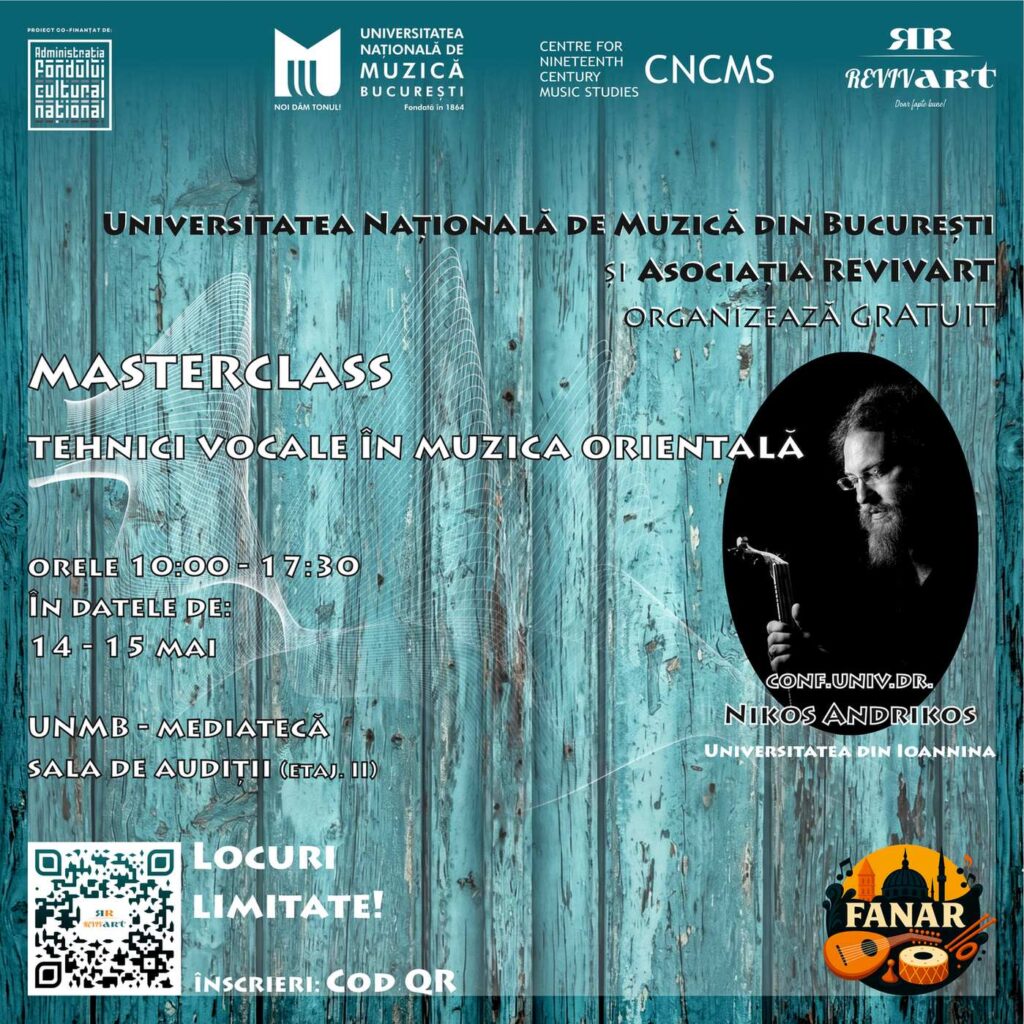
On 14 and 15 May, Associate Professor Nikos Andrikos of the University of Ioannina gave a masterclass on vocal techniques in Oriental music. The participants explored modal particularities, manners of ornamentation, intonation control, vocal emission and the alternation of vocal and instrumental discourse. The activity brought the Byzantine style into dialogue with Turkish classical music of the Ottoman tradition, offering students, teachers and performers direct contact with a research-based artistic practice.
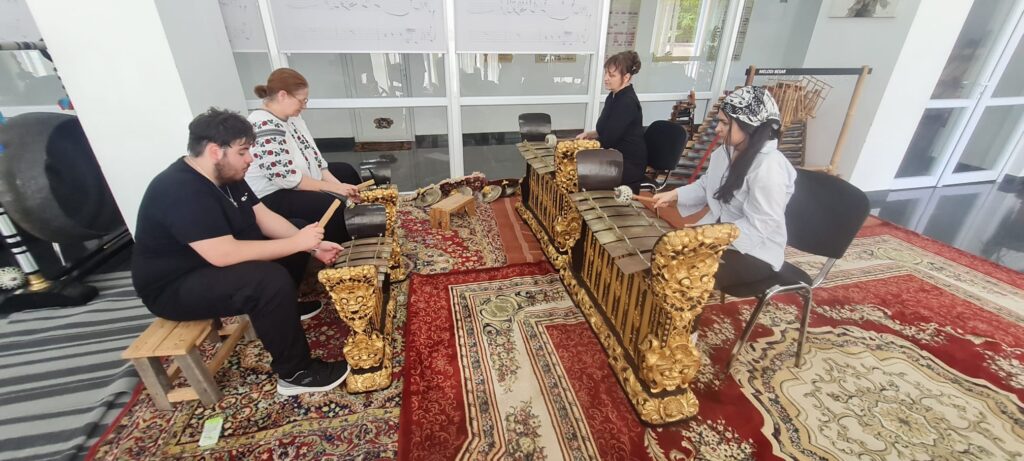
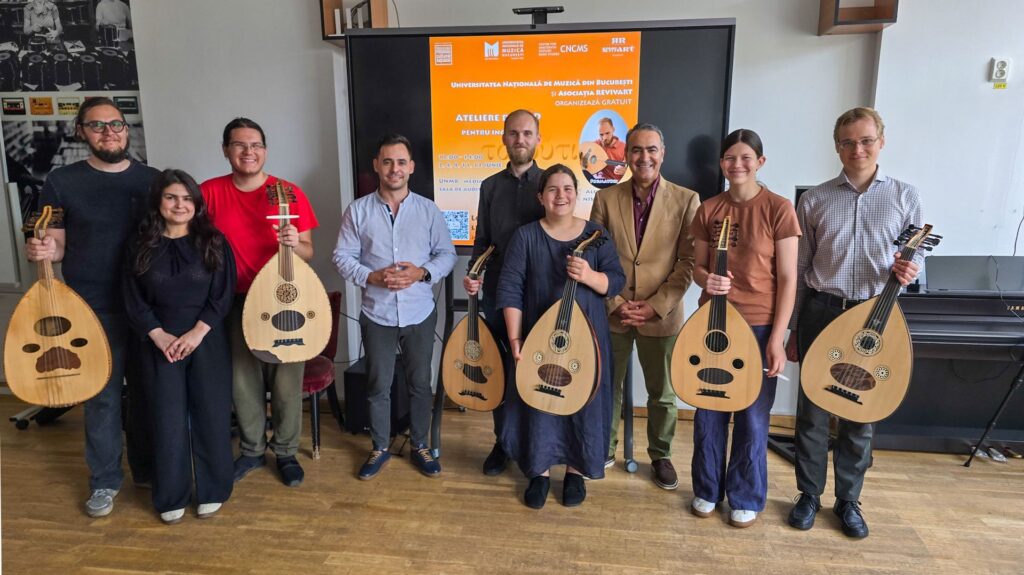
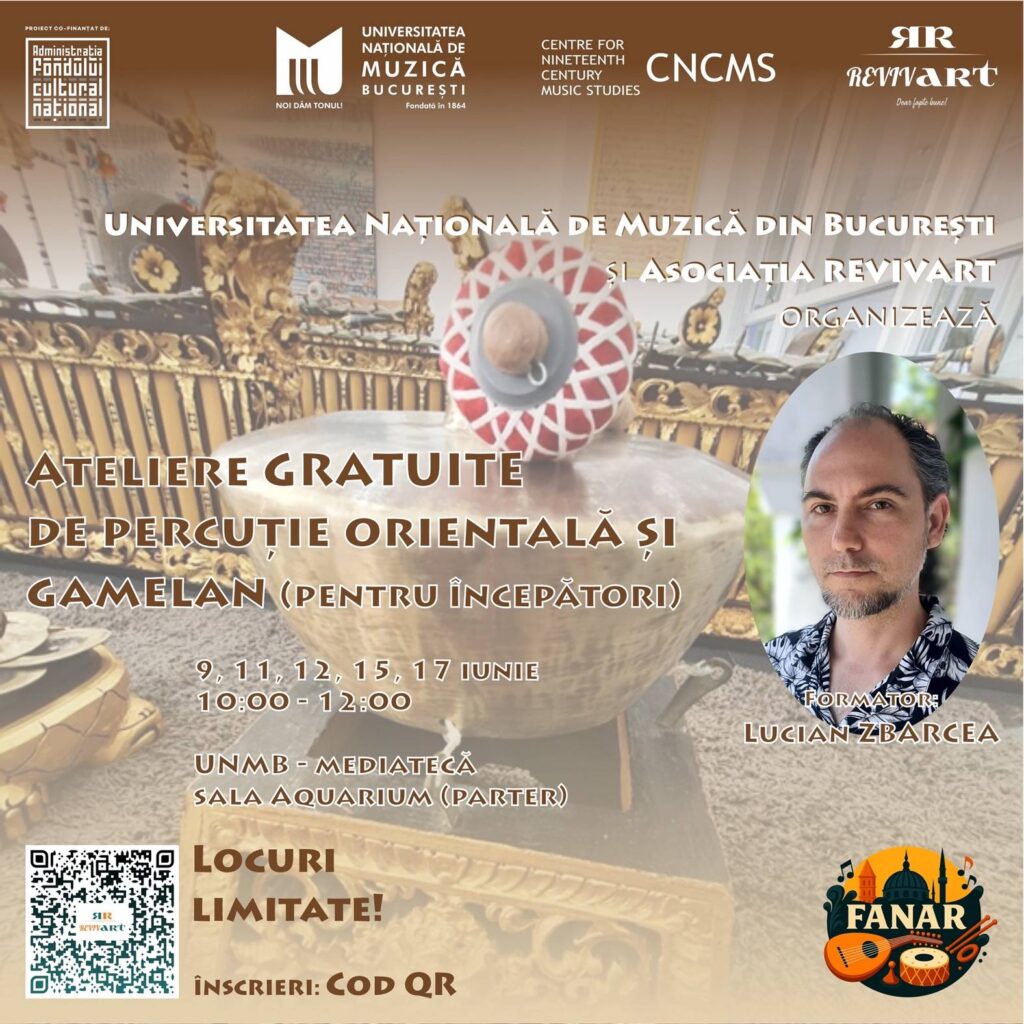
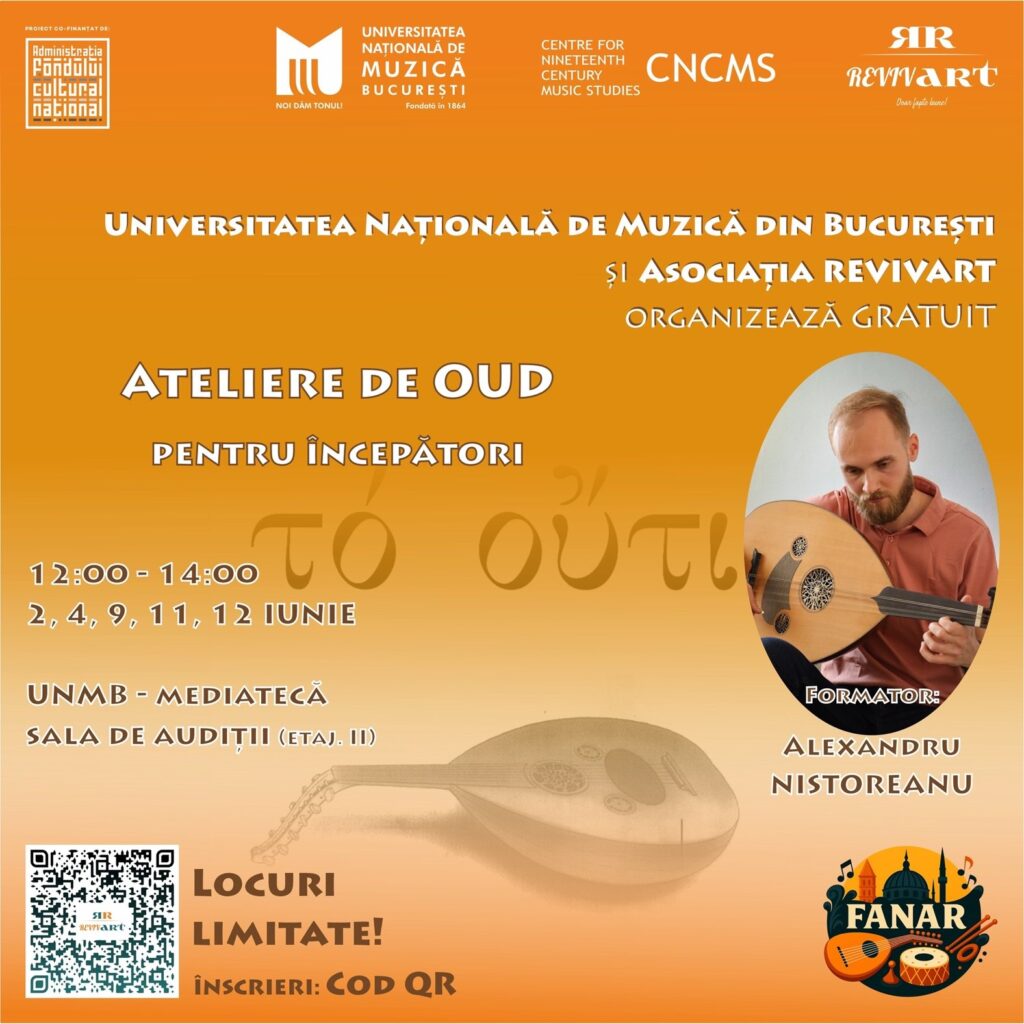
The educational dimension continued in June. Alexandru Nistoreanu led five oud workshops, on 2, 4, 9, 11 and 12 June, focused on tuning, basic technique and phrasing in Ottoman art music and in Phanariot repertoires. Between 9 and 17 June, Dr Lucian Zbârcea coordinated the workshops on Oriental percussion and gamelan, stimulating creativity and bringing musical traditions from the Mediterranean and Indonesia into relation with one another. Through the diversity of the instruments and of the methods, the project created accessible pathways for beginners and encouraged active participation in musical practices that are little represented in the Romanian cultural landscape.
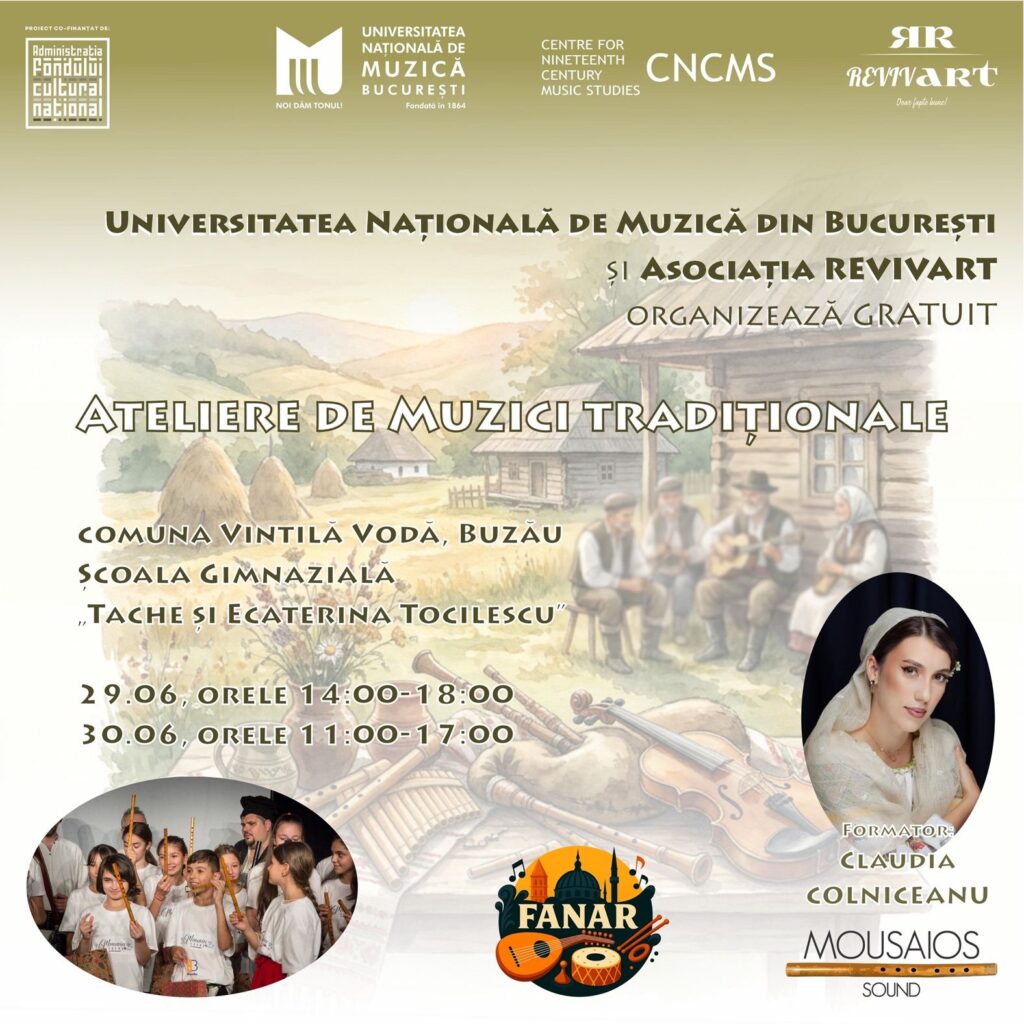
A distinct strand was dedicated to communities outside Bucharest. On 29 and 30 June, at the “Tache și Ecaterina Tocilescu” Secondary School in Vintilă Vodă, Buzău County, Claudia Colniceanu, Ștefan Milutinovici, Cristi Mușa and Mircea Micu (Living Human Treasure) involved children and young people in activities of cobza, fluier (shepherd’s flute), folk dance and oral transmission of tradition. The workshops also contributed to the preparation of a repertoire for the young people’s participation in the International Folklore Festival in Montenegro.
From 22 May to 15 June, the “Vasile Grigore” Art Museum hosted the thematic exhibition organised with the support of the “George Enescu” National Museum and curated by Mariana Petrescu. It complemented the musical undertaking with a visual perspective on the period and offered the public an additional point of access to the cultural heritage addressed by FANAR.
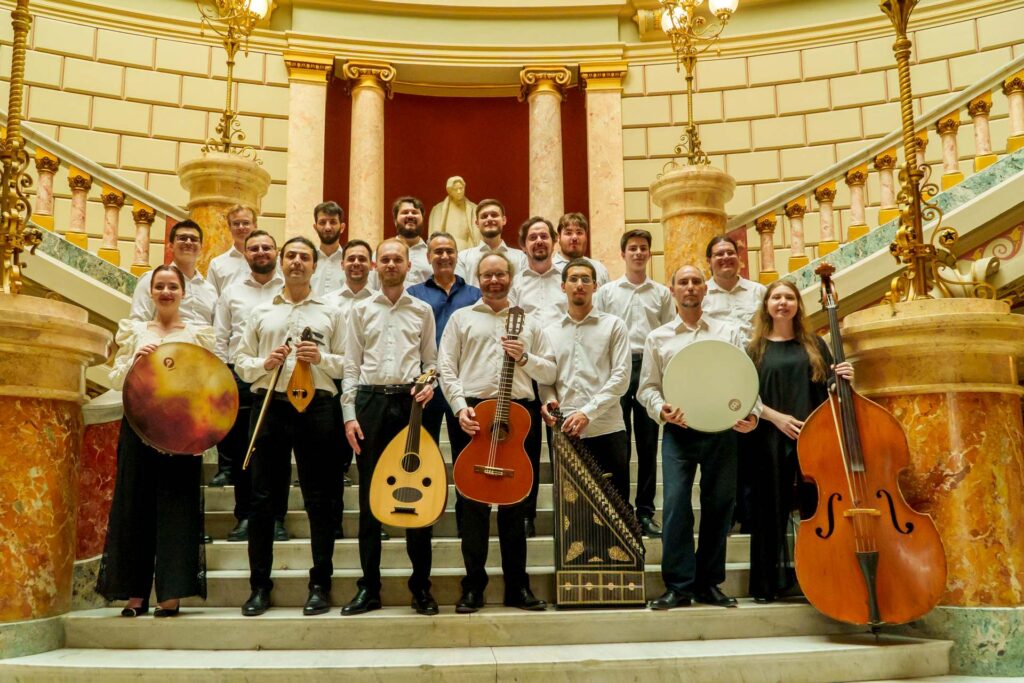
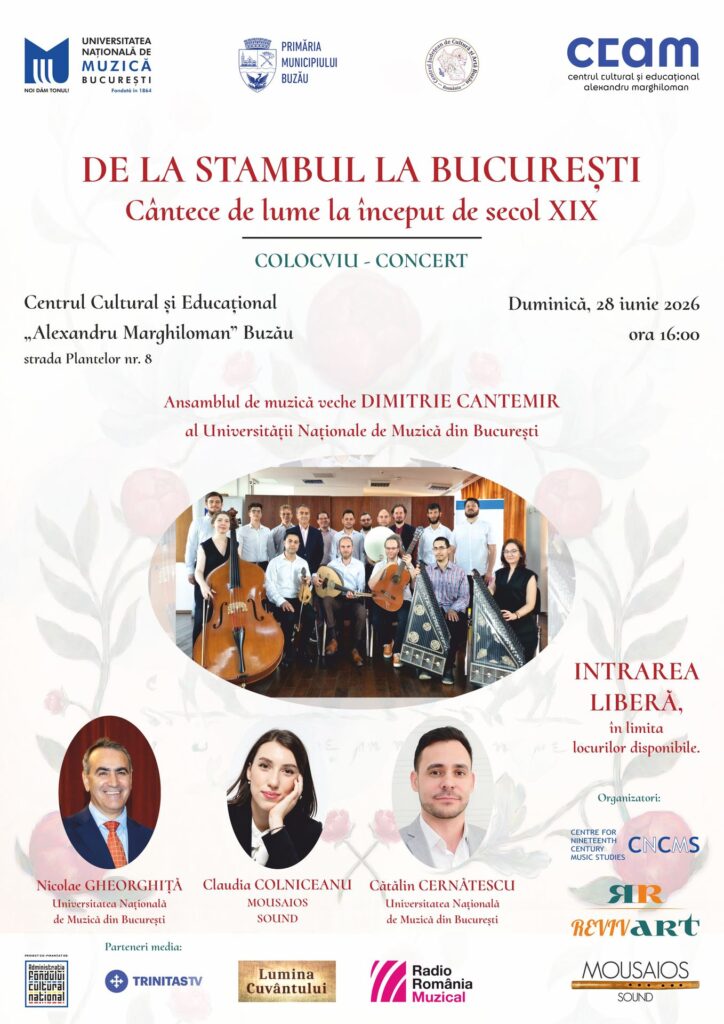
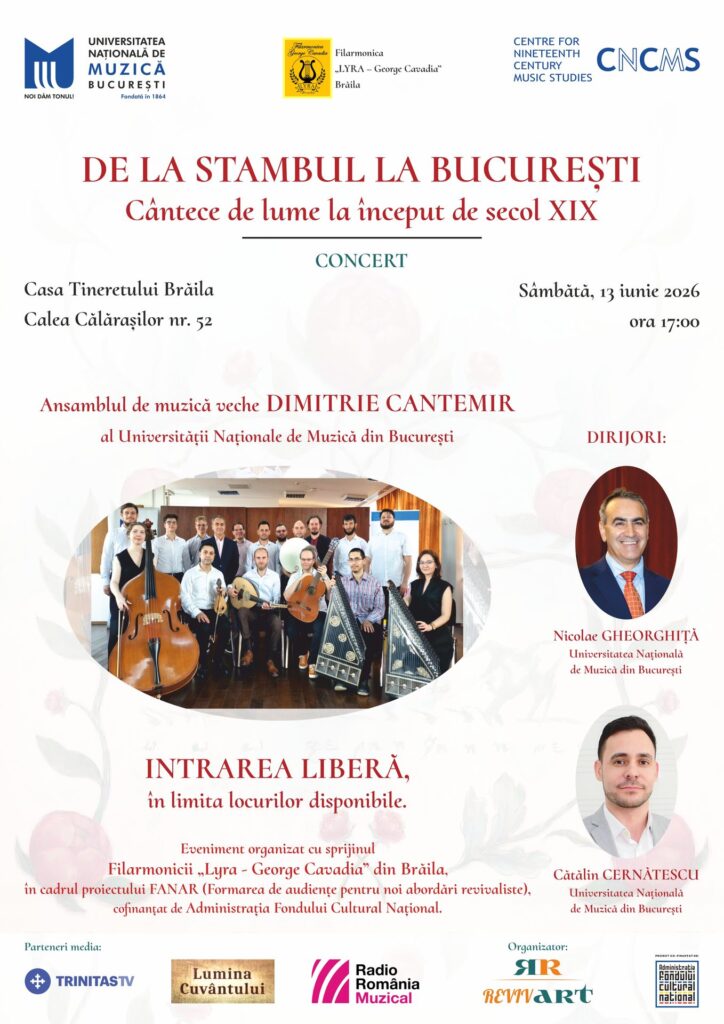
The central artistic component of the project was the concert series “De la Stambul la București. Cântece de lume la început de secol XIX” (“From Istanbul to Bucharest. Secular Urban Songs of the Early Nineteenth Century”), performed by the “Dimitrie Cantemir” Early Music Ensemble. The programme recovered songs of love and longing that circulated between Istanbul and Bucharest and highlighted works by Anton Pann and George Ucenescu, alongside pieces preserved in psaltic manuscripts.
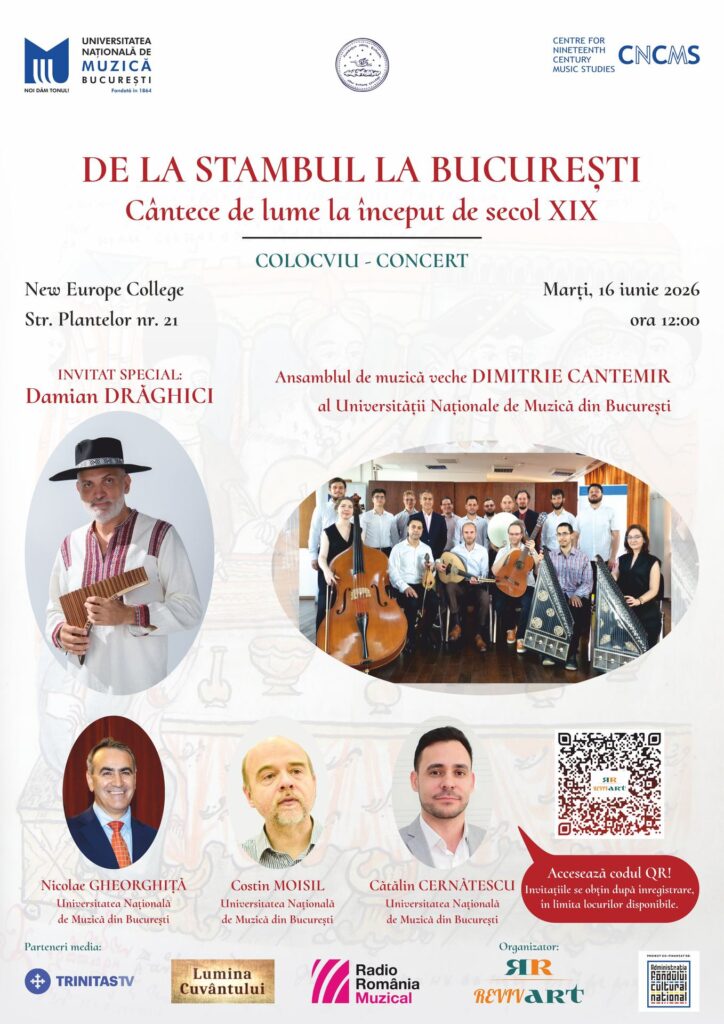
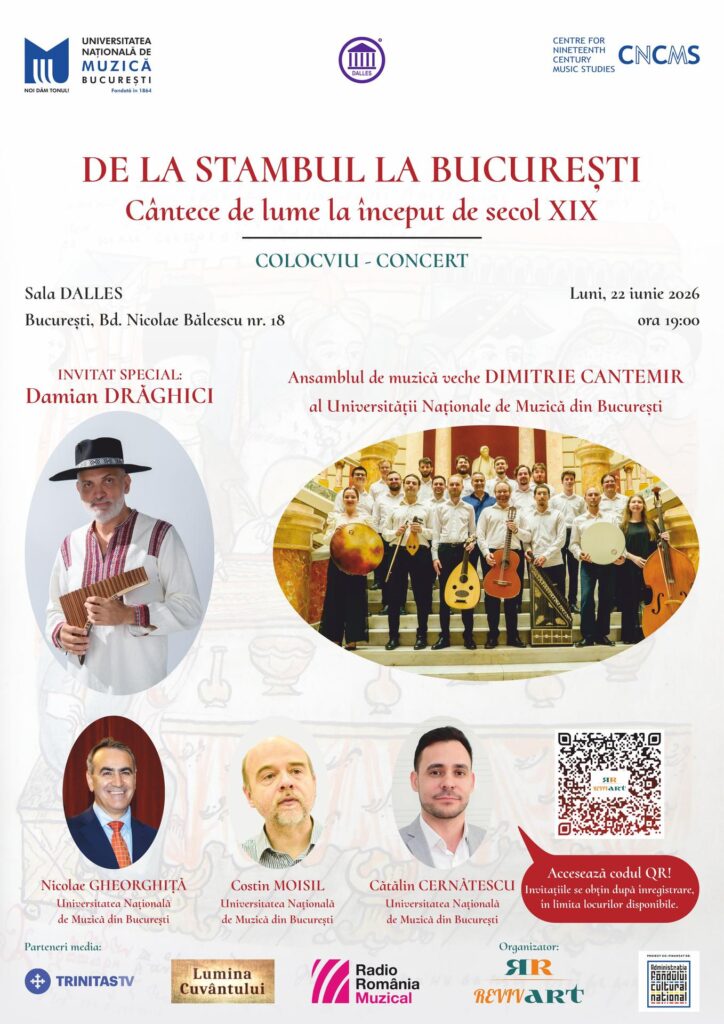
The series comprised appearances at the Romanian Athenaeum on 10 June, as part of the Bucharest meeting of the CIVIS European Alliance; at the Youth House in Brăila on 13 June, with the support of the “Lyra-George Cavadia” Philharmonic; at New Europe College on 16 June, within the international conference “The Phanariot Past and its Afterlives”; at the “Ioan I. Dalles” Metropolitan Centre for Education and Culture on 22 June; and at the “Alexandru Marghiloman” Cultural and Educational Centre in Buzău on 28 June. Admission was free of charge.
The concerts at New Europe College and at the Dalles Hall had Damian Drăghici as special guest. At New Europe College, the programme was preceded by a colloquium in which the musicologists Nicolae Gheorghiță, Costin Moisil, Cătălin Cernătescu and Damian Drăghici discussed the rural and urban musics of the Romanian Principalities and the new possibilities of extending audiences through the virtual auditorium. Broadcasts and recordings gave the public access beyond the geographical limits of the concert halls. Youtube | YouTube | YouTube | Facebook
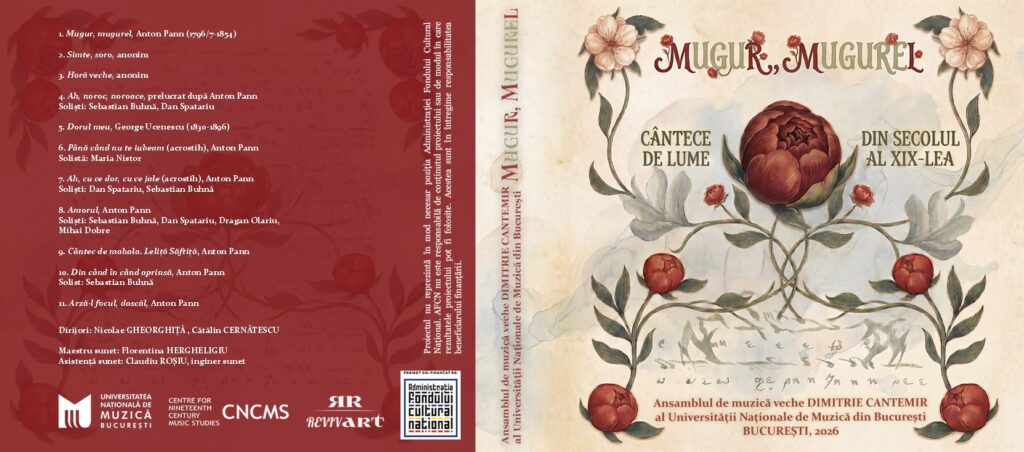
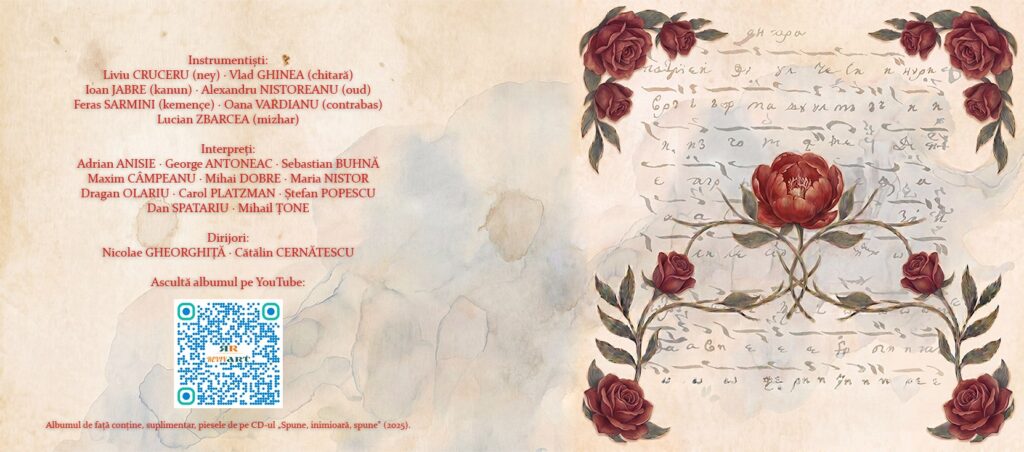
Complementing the stage activities, the repertoire was recorded on the audio album “Mugur, mugurel”, the second album of the “Dimitrie Cantemir” Ensemble. The recording brings together cântece de lume (secular urban songs) from the beginning of the nineteenth century, presented through historically informed performance, and it has been made available to the public online, free of charge. YouTube
The project also produced the facsimile edition “George Ucenescu – Carte de cânturi” (Book of Songs), realised with the support of the Library of the Romanian Academy and of the UNMB Publishing House. The source, compiled by the Brașov musician George Ucenescu, a disciple of Anton Pann, is one of the most important collections of cântece de lume of the nineteenth century. The volume inaugurates the series “Monumenta Musicae Romaniae. Series Fontium et Editionum Criticarum” of the Centre for the Study of Nineteenth-Century Musics and was produced both in print and as an e-book, for free distribution to performers, researchers and lovers of early music. The album and the volume were launched publicly at the concert of 28 June in Buzău. Facebook
The visibility of the project was supported through constant communication on Facebook, Instagram and YouTube, through the programme “Lumea în armonie” (“The World in Harmony”) on Trinitas TV (YouTube) and through the production of the five episodes of the podcast “Muzici vechi pentru vremuri noi” (“Early Musics for New Times”).
Through the organisation of the workshops, the exhibition, the concerts, the album, the facsimile volume and the digital content, the FANAR project developed performance skills, created contexts for meeting the public and provided tools for long-term access to forgotten repertoires.
Photo Gallery

AURAL
În curs de actualizare.