
AFCN 2025
Between March and September 2025, the REVIVART Association, in partnership with UNMB, the Center for Studies on 19th Century Music (CNCMS), carried out the MACAM project (Music and Emotions at the Courts of the Moldavian-Wallachian Aristocracy). The project was born out of a desire to bring back to the attention of the contemporary public an essential part of Romanian musical heritage, located at the intersection of Byzantine tradition, Eastern influences, and the refinement of the aristocratic salons of the Romanian Principalities. The project aimed to recover and valorize the secular musical repertoires of the Phanariot era. These were identified in rare manuscripts, such as that of Archdeacon Nichifor Cantuniari from 1813, published in both physical and digital formats.
At the same time, MACAM promoted Romanian musical heritage through modern means: high-quality audio recordings, digital platforms, online workshops, and cultural events. The launch of the project’s official website gave the public free access to psaltic notation scores, concert recordings, and educational resources developed within the project. Details Macam.ro
Another major objective was to strengthen a cultural community interested in early music and its historical context. By involving the National University of Music in Bucharest, international institutions, and renowned specialists, MACAM created a space for dialogue, research, and artistic creation. During the project, previously unpublished pieces from psaltic manuscripts were transcribed and performed. These works were included in an audio album produced by the Dimitrie Cantemir Early Music Ensemble, made up of professors, students, and alumni of the UNMB, together with collaborators from the Psalmodia ensemble. Details YouTube
To support the process of historically informed interpretation of the repertoires covered, several cultural activities were organized:
Interdisciplinary educational workshops
and instrumental masterclasses
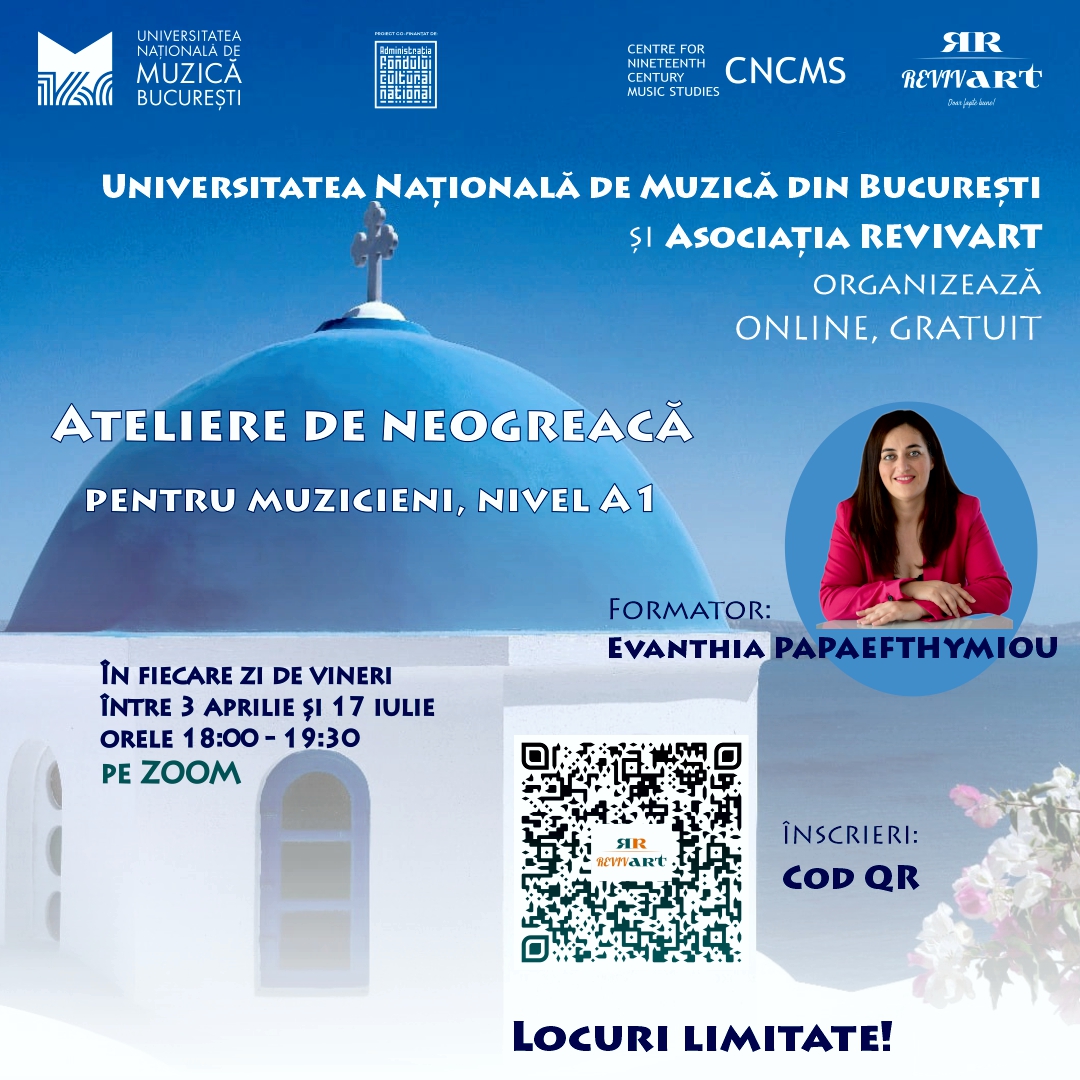
Modern Greek courses
Organized between April 3 and July 17, the 15 free online workshops were led by Evanthia Papaefthymiou, teacher and art historian. The courses were designed for musicians interested in understanding modern Greek, which is essential for interpreting and contextualizing Phanariot musical sources.
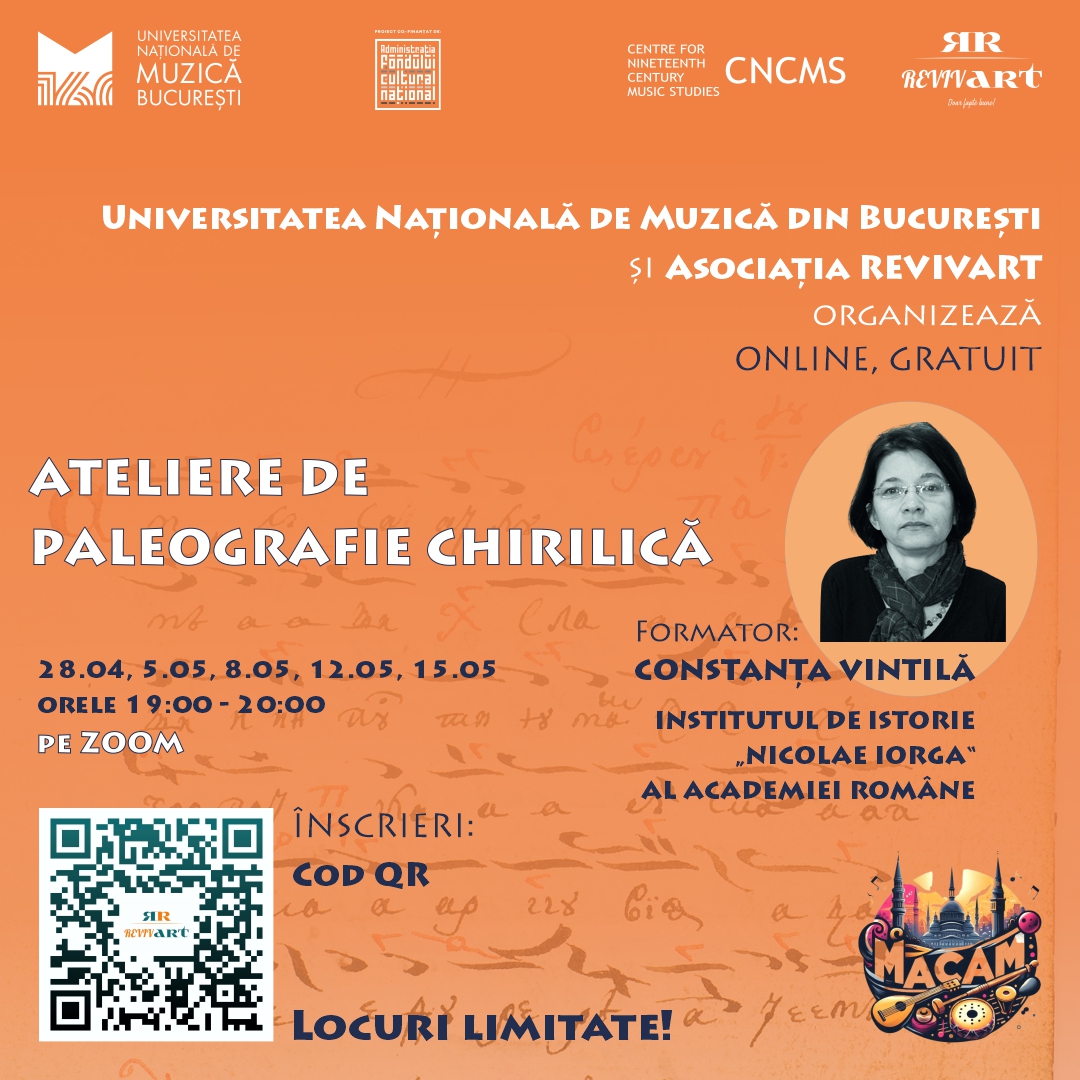
Cyrillic paleography workshops
Dr. Constanța Vintilă coordinated five sessions between April 28 and May 19, during which musical texts from the 19th century were analyzed. Participants learned to decode Cyrillic script and understand the social and emotional context of the songs.
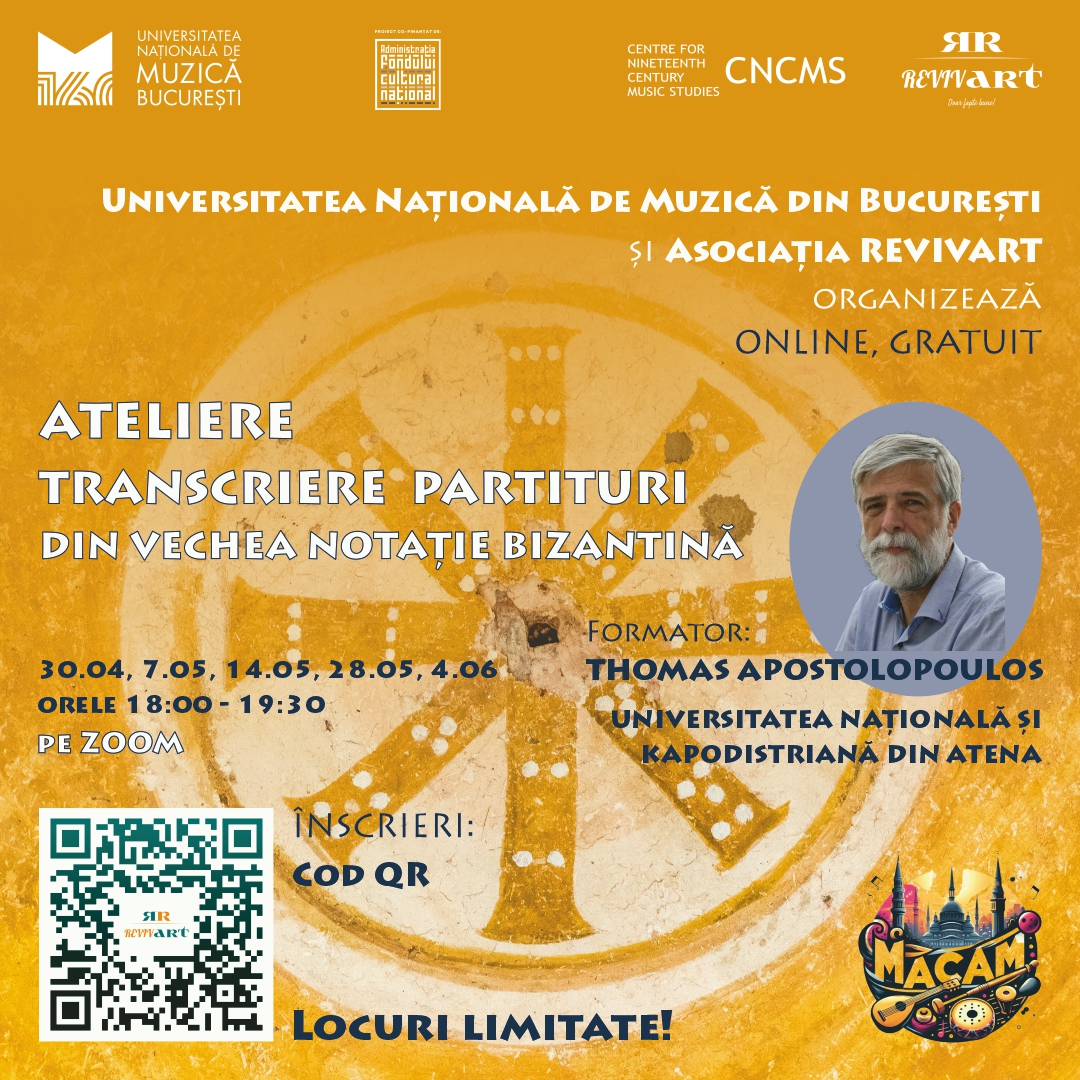
Musical transcription from ancient Byzantine notation
Professor Thomas Apostolopoulos from the National and Kapodistrian University of Athens held five workshops dedicated to the transcription of non-religious repertoires from ancient Byzantine notation.
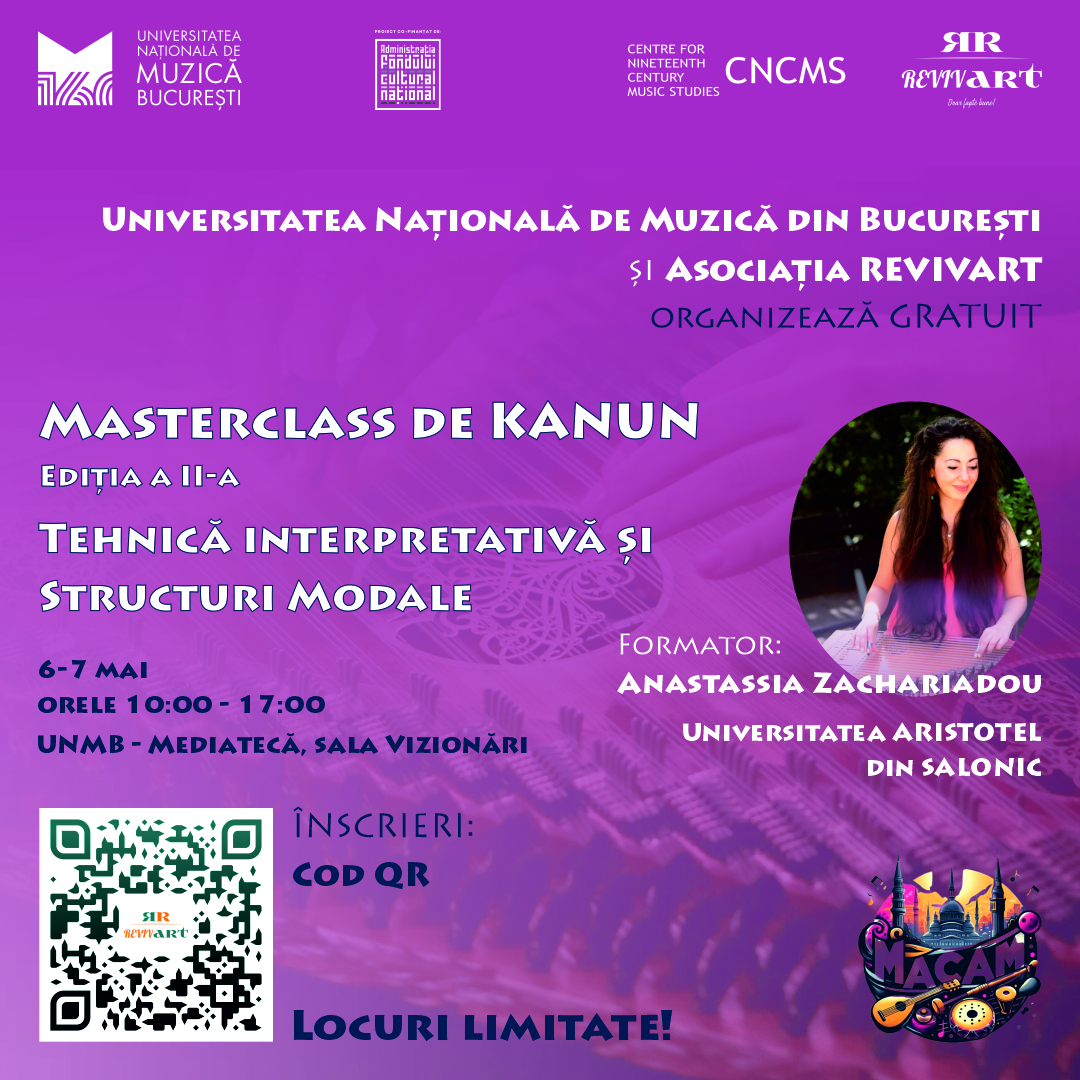
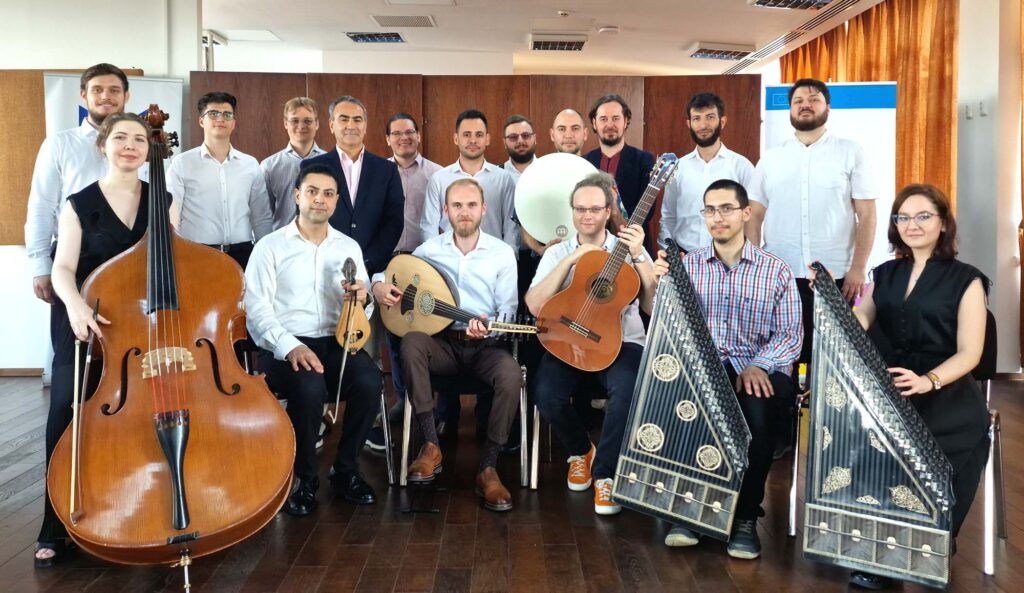
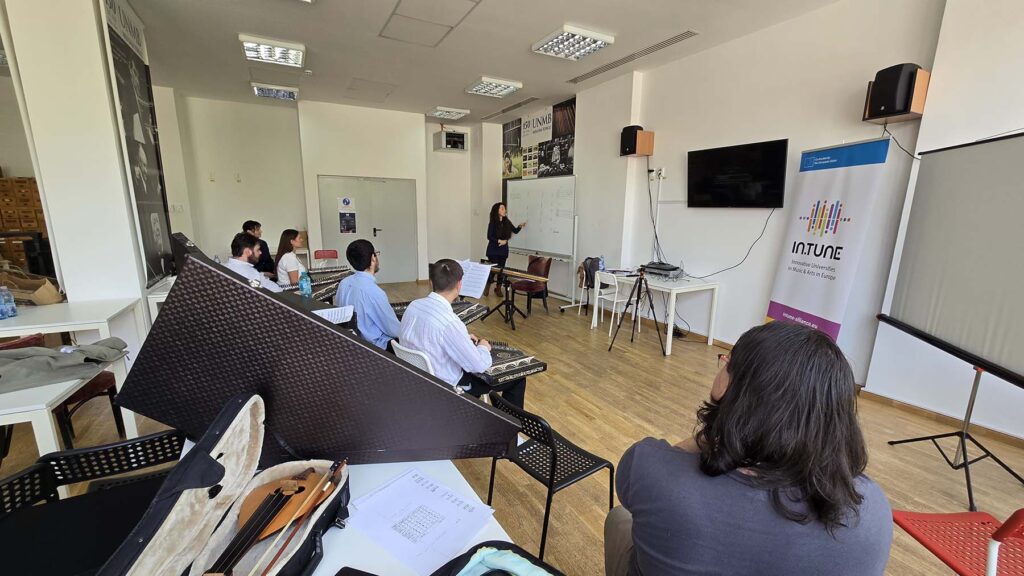
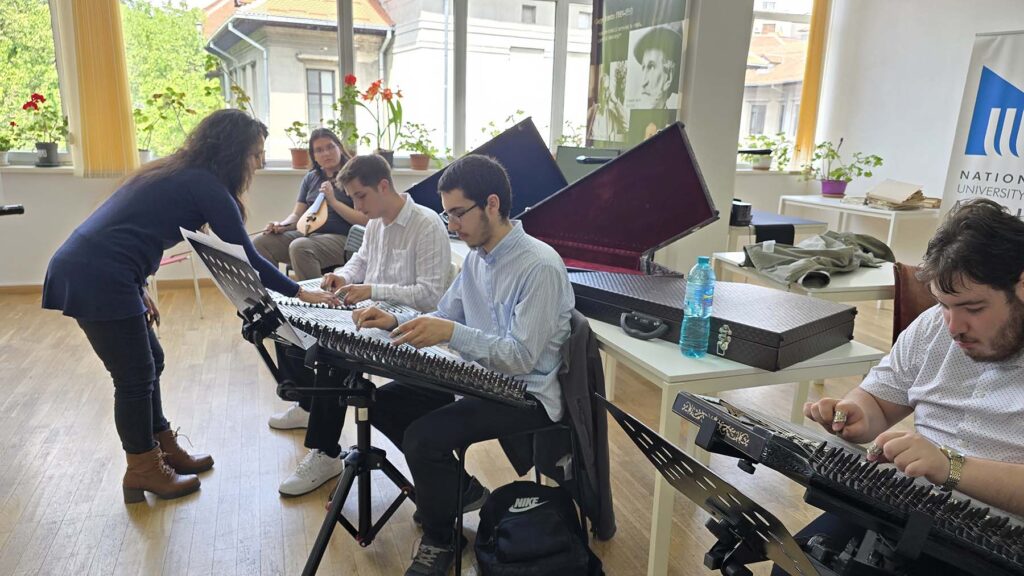
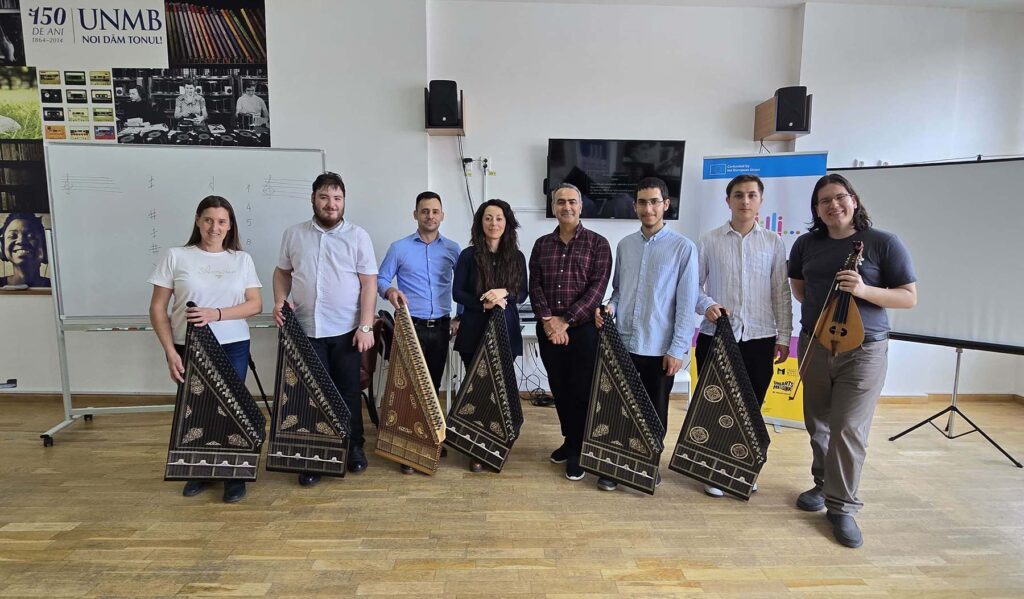
Kanun masterclass – Anastassia Zachariadou
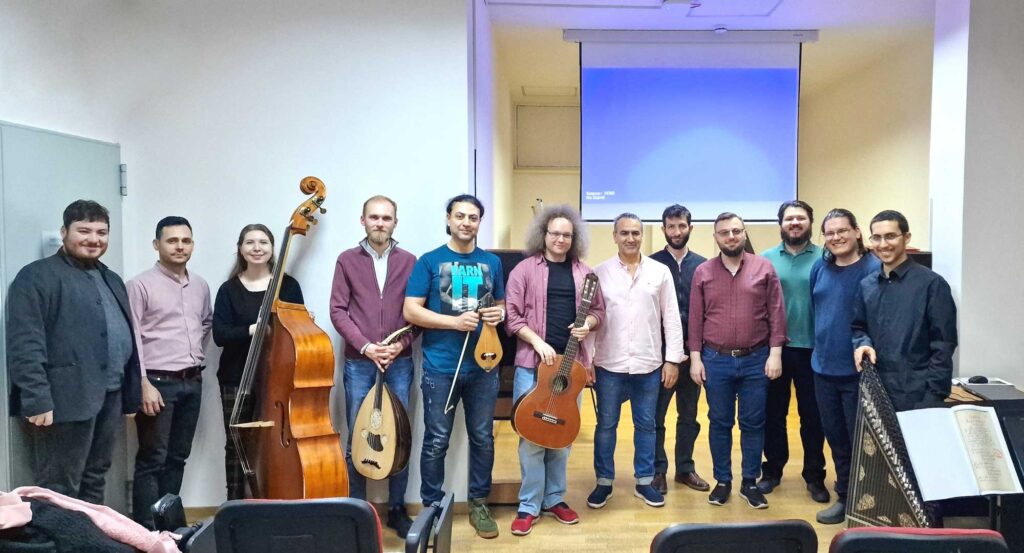
The masterclass took place on May 6 and 7 at the National University of Music. Participants were introduced to the performance technique of the kanun, an emblematic instrument of Eastern music, by Anastassia Zachariadou from Aristotle University in Thessaloniki.
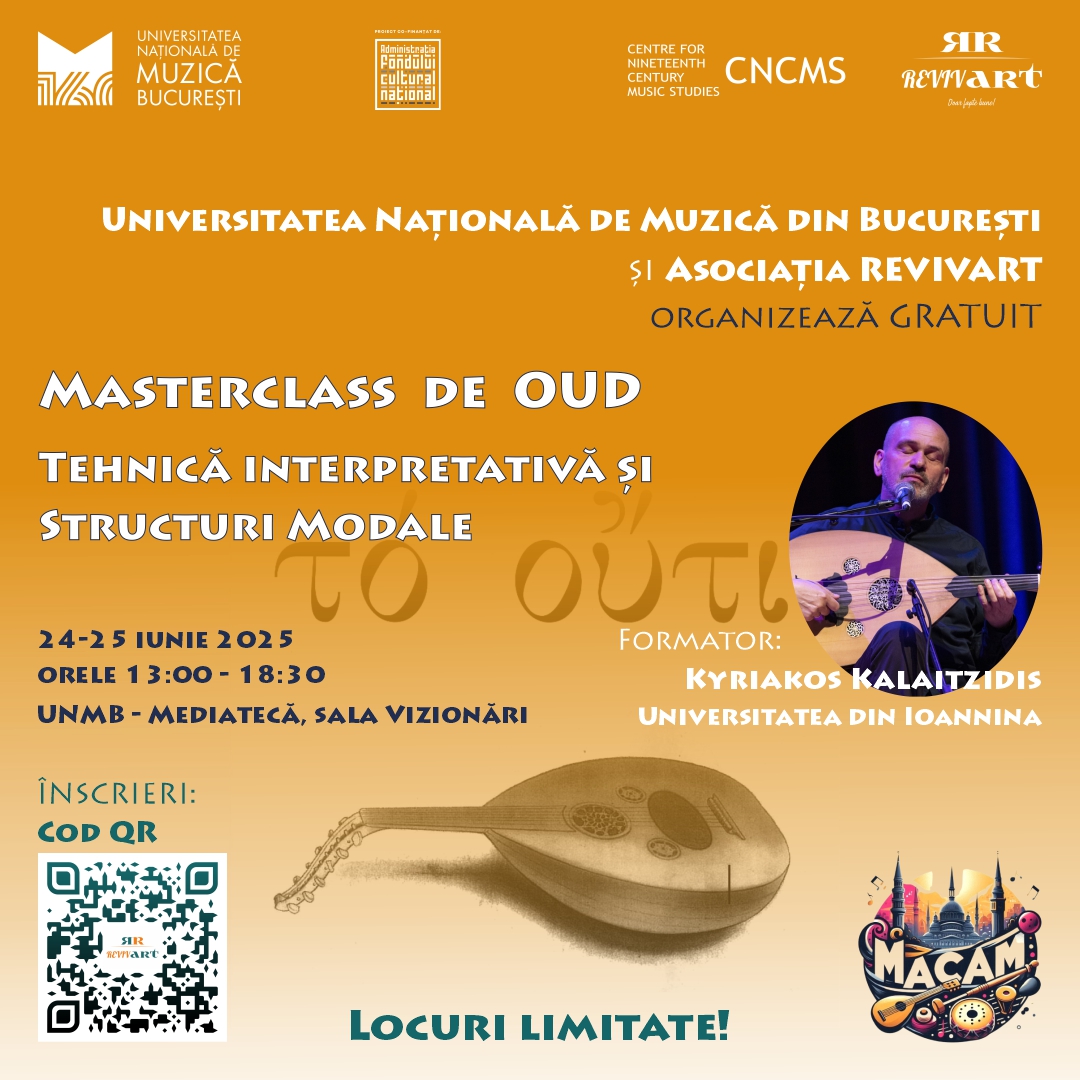
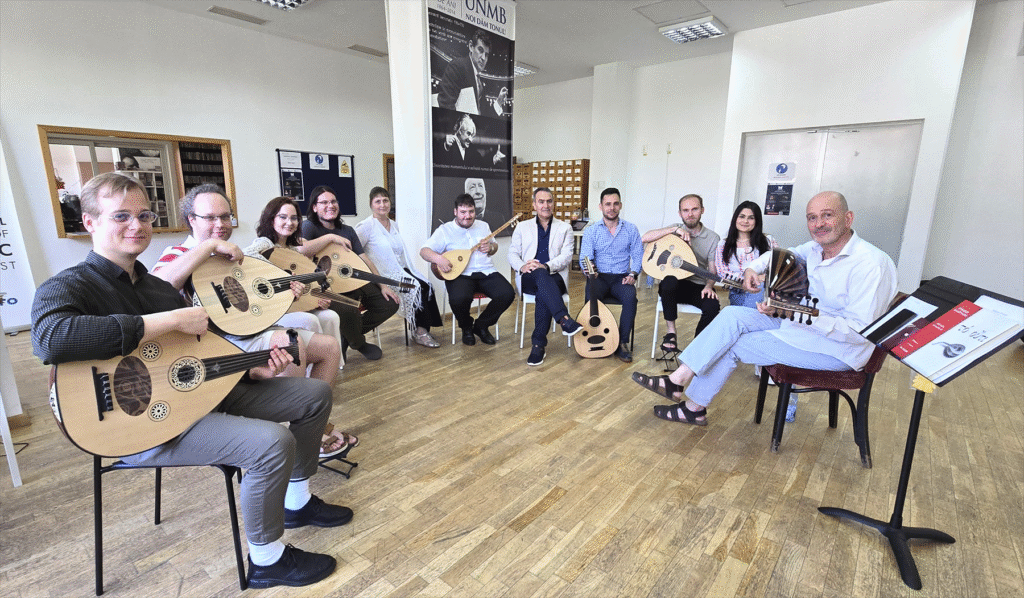
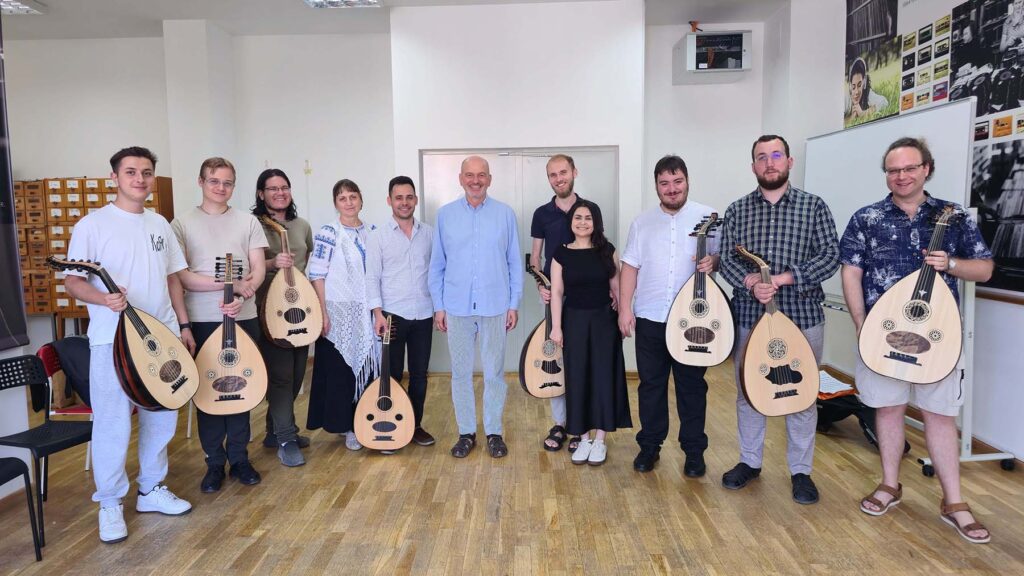
Oud masterclass
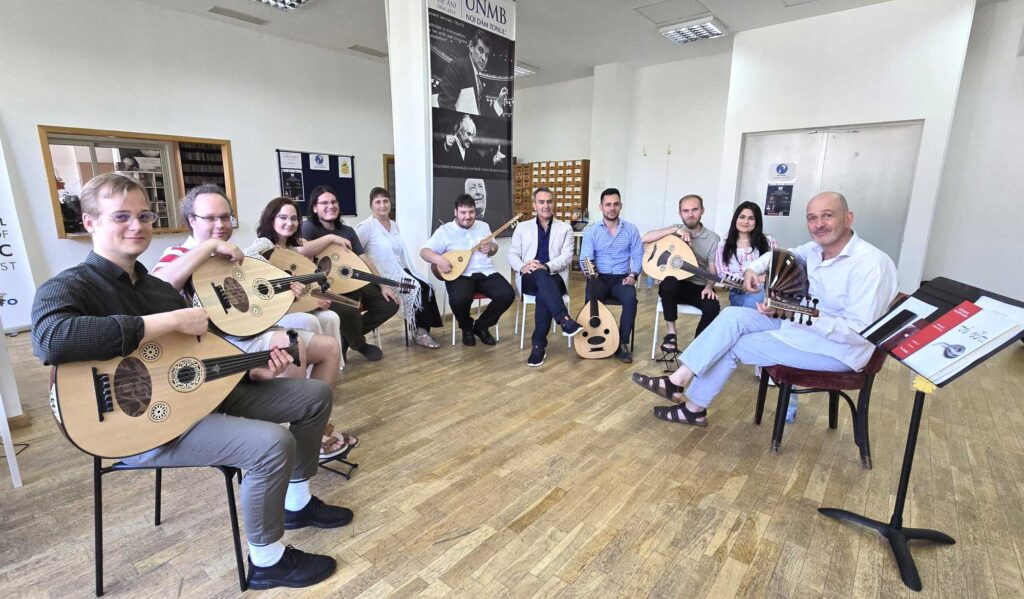
Held on June 24 and 25, the masterclass offered an academic and artistic perspective on oud performance, with a focus on post-Byzantine musical manuscripts. Professor Kyriakos Kalaitzidis from the University of Ioannina is an international authority in the field, with over 2,000 concerts performed in 45 countries.

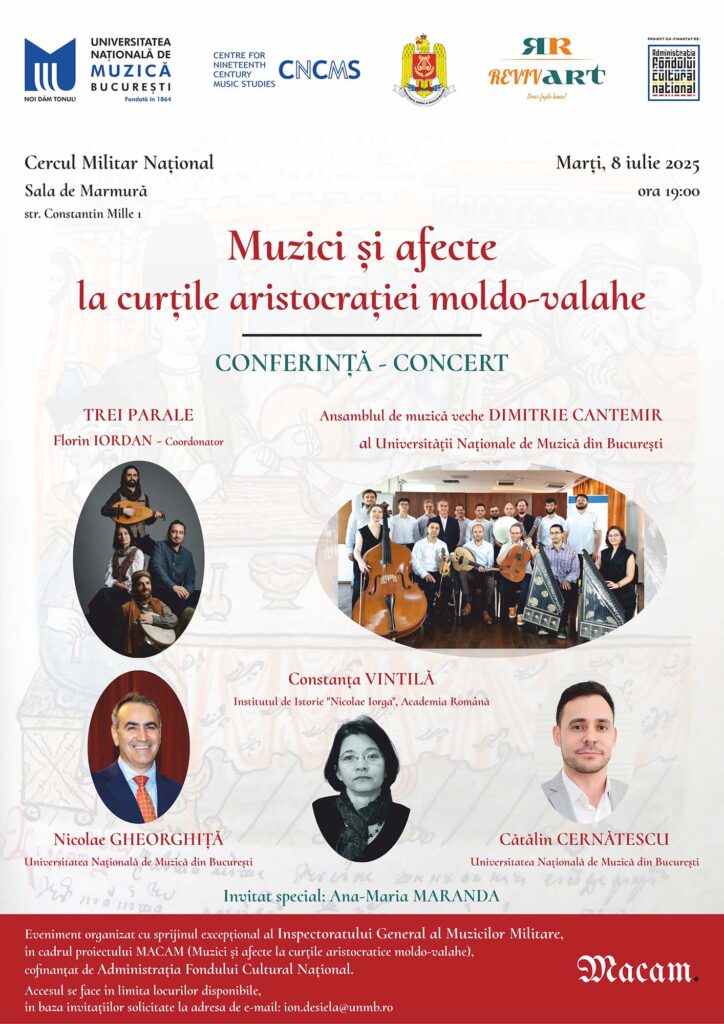
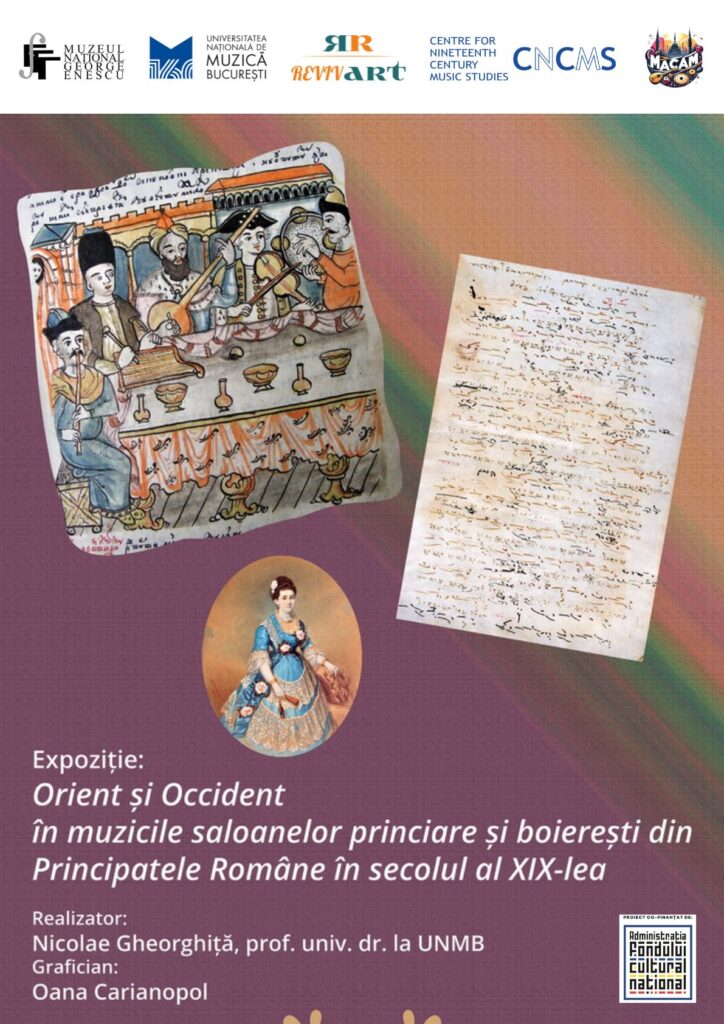
Concerts and colloquiums
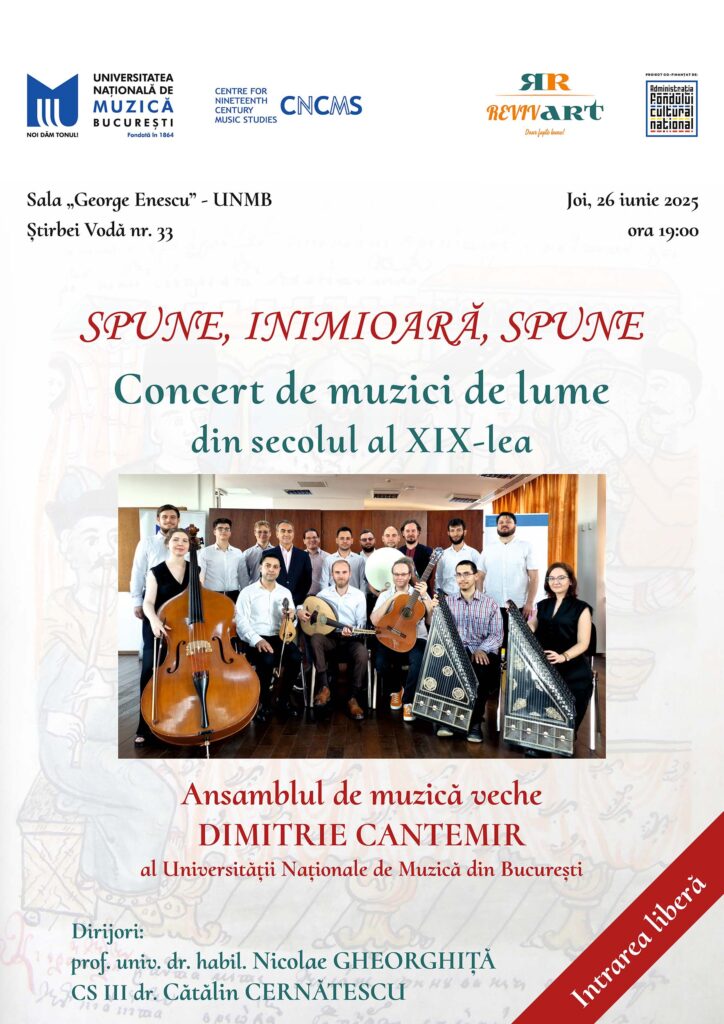
The ECOU Project
The ECOU project (Concert Experiences for Eyes and Ears), co-funded by the National Cultural Fund Administration (AFCN), aimed to research and promote Byzantine music works that address themes such as somatic complexes and disabilities, exploring aspects related to visual and hearing impairments from the perspective of inclusion and accessibility.
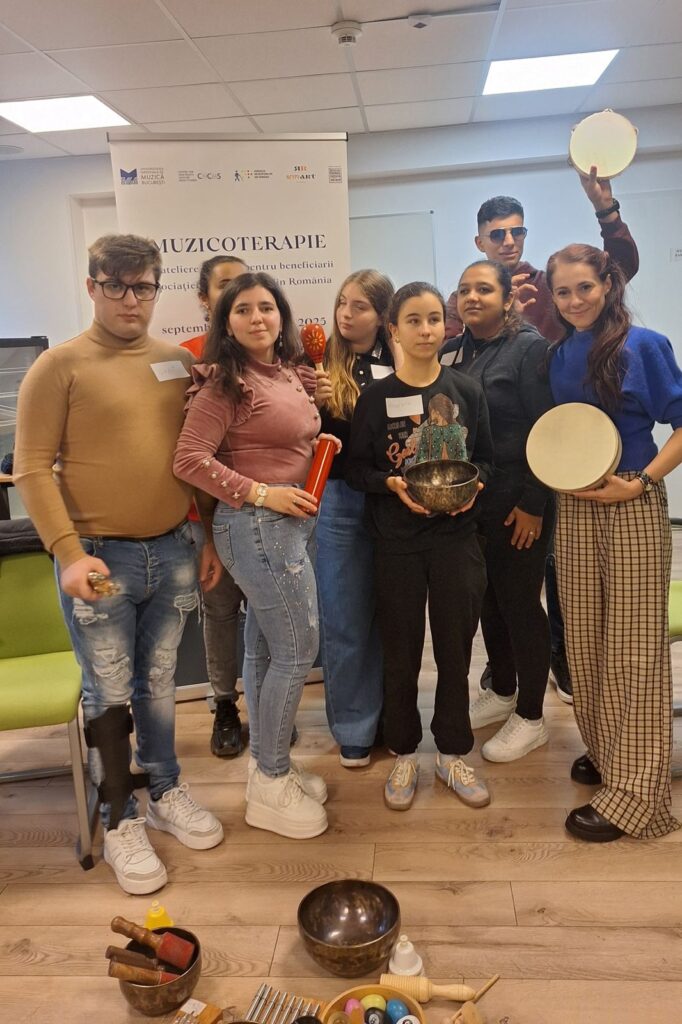
The REVIVART Association’s initiative aimed to facilitate access for blind and hearing-impaired young people to high-quality musical and artistic experiences by integrating them as performers in inclusive concerts and activities. Through its educational aspect, the project aimed to reduce prejudices related to the ability of vulnerable people to express themselves musically and artistically, by providing access to music therapy and stained glass painting workshops for 150 beneficiaries with visual and hearing impairments.
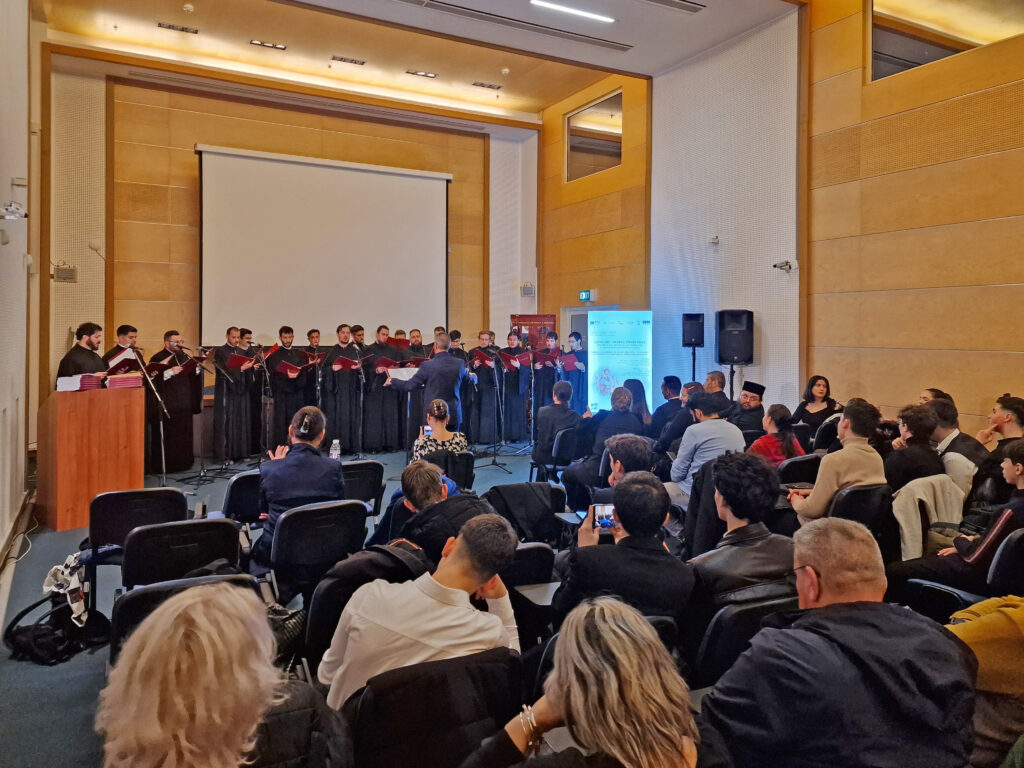
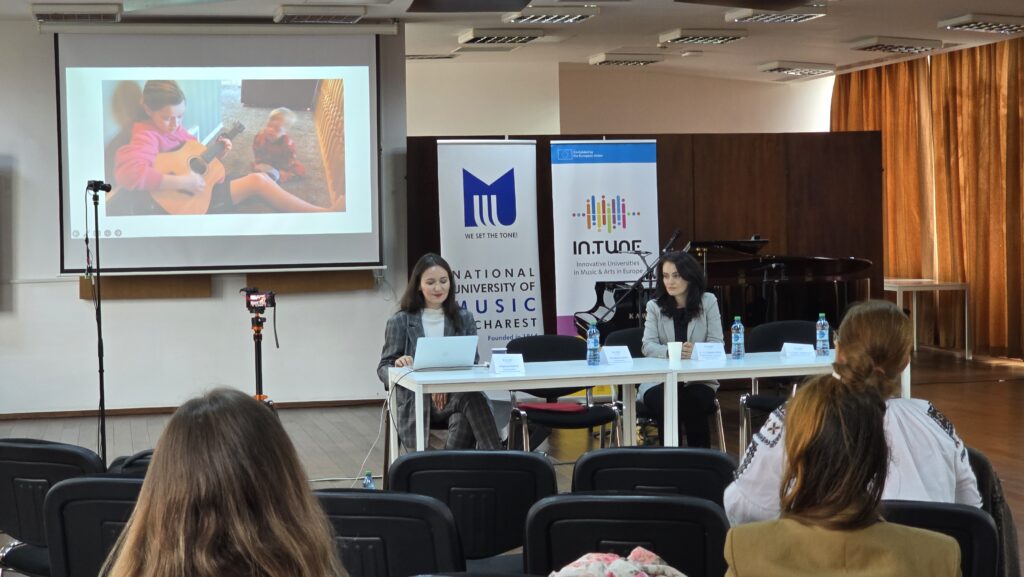

In the spirit of accessibility and cultural dissemination, the project’s products were distributed free of charge to members of the target group, including teachers, students, musicians, researchers, and cultural institutions. The REVIVART Association’s initiative contributes to strengthening a community interested in promoting traditional music and stimulating interdisciplinary dialogue around Romanian sound heritage.